Pumpkin Spice Cheesecake with Italian Meringue
Published: October 25, 2026
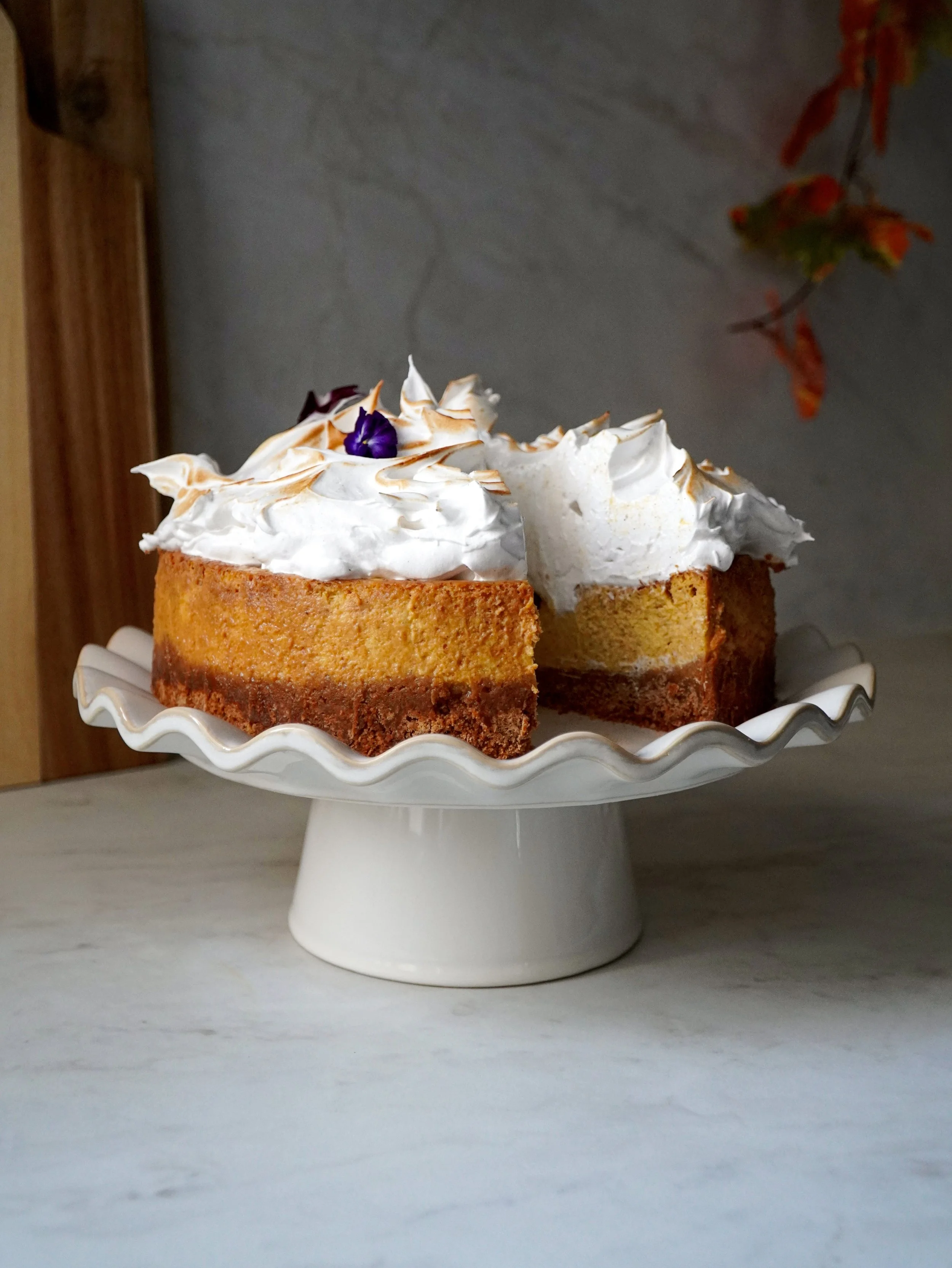
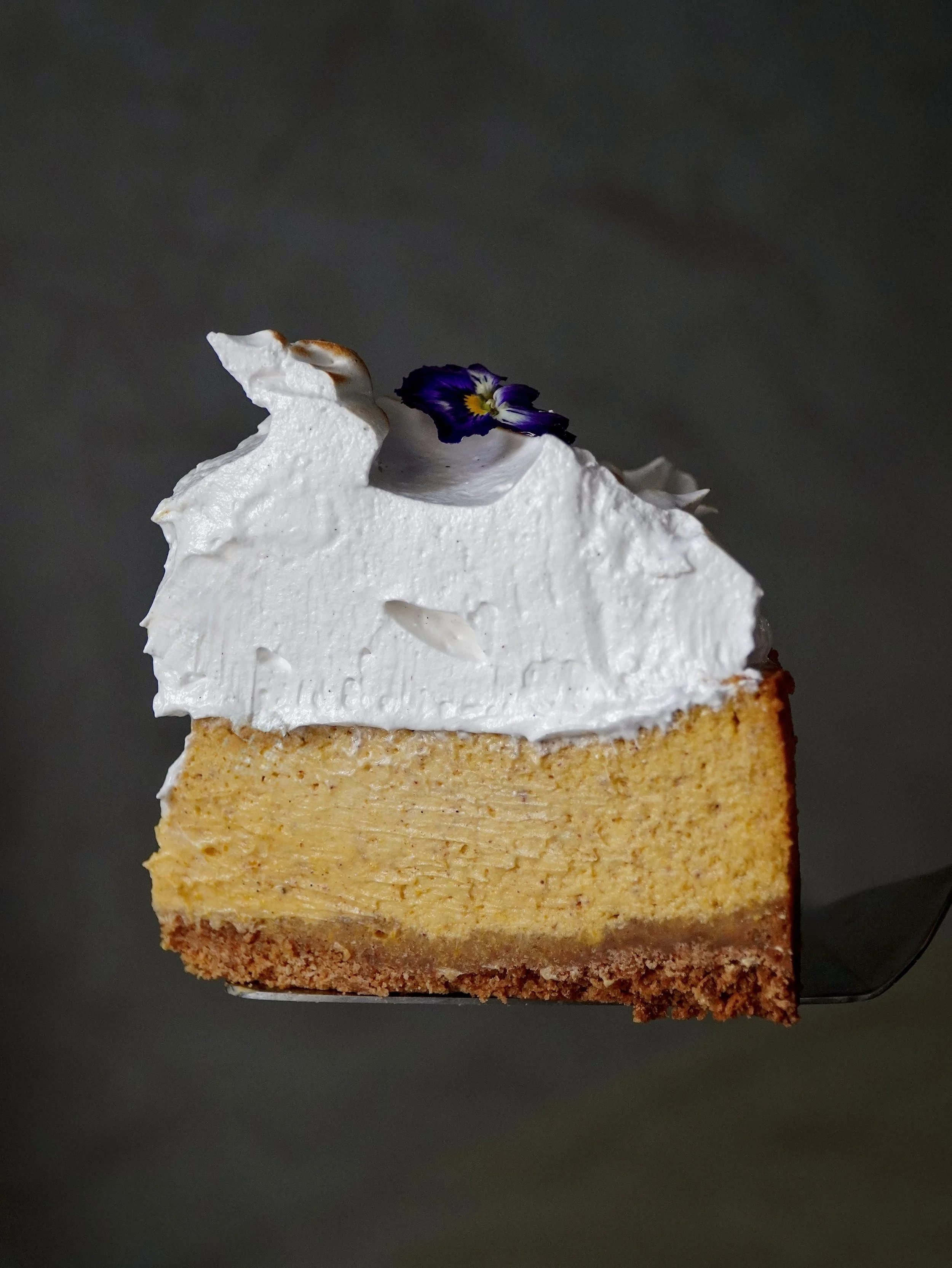
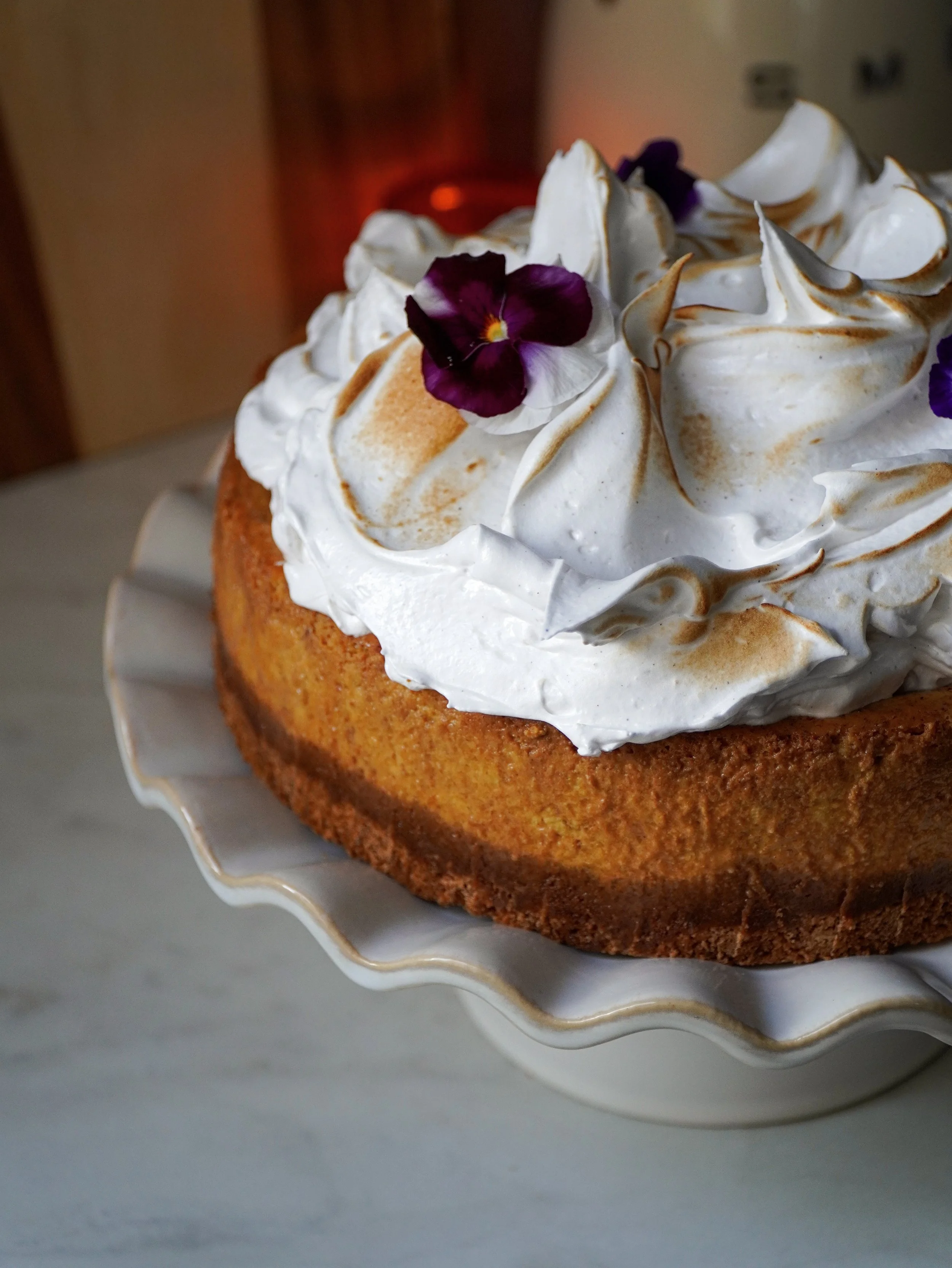
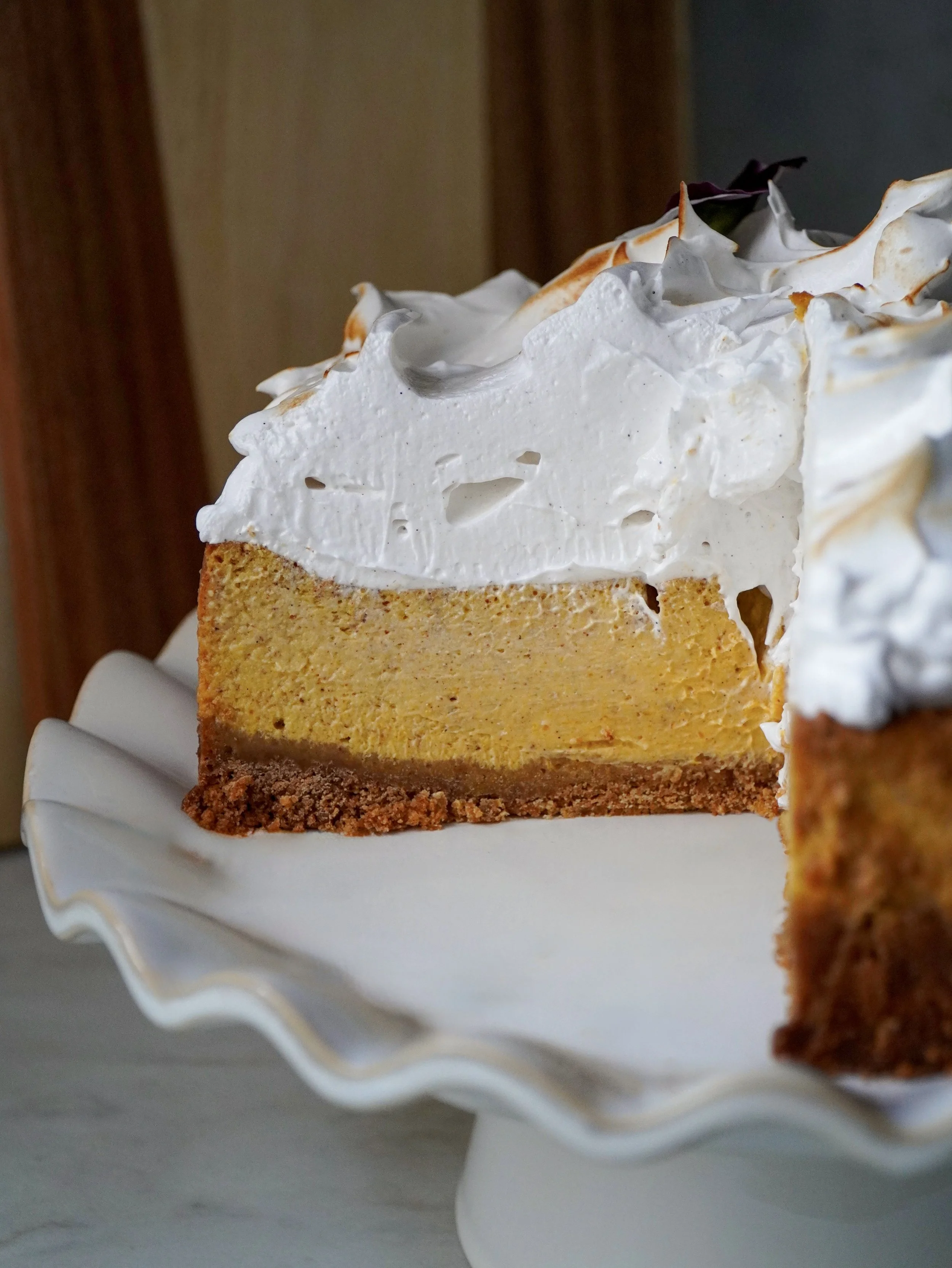
This Pumpkin Spice Cheesecake with Italian Meringue is rich, creamy and full of warm pumpkin spice flavor. Made with a buttery graham cracker crust, a smooth pumpkin cheesecake filling and topped with fluffy, lightly toasted Italian Meringue, it’s the perfect dessert for fall. Serve it for Thanksgiving, a cozy family gathering, or whenever you’re craving something special.
WHY YOU’LL LOVE THIS RECIPE
🧡Rich and creamy - This pumpkin spice cheesecake has a wonderfully smooth and creamy texture.
🧡Full of pumpkin spice flavor - A combination of warm spices gives the cheesecake that classic cozy fall flavor.
🧡Made with real pumpkin purée: Pumpkin purée adds moisture, a beautiful warm color and a subtle pumpkin flavor throughout the cheesecake filling.
🧡Buttery graham cracker crust - The homemade graham cracker crust adds a delicious buttery flavor and a little texture that complements the creamy filling.
🧡Fluffy Italian meringue topping - The light, airy Italian meringue creates a beautiful contrast with the rich pumpkin cheesecake.
🧡Perfect for Thanksgiving - This cheesecake makes a wonderful alternative to traditional pumpkin pie for your Thanksgiving dessert table.
🧡Great for fall gatherings - Whether you're hosting a dinner party or celebrating with family, this cheesecake is a lovely dessert to share.
How To Store?
Store the cheesecake in an airtight container or cover it carefully with plastic wrap and refrigerate for up to 3 days. Keep in mind that Italian meringue is best enjoyed fresh, as it can gradually lose its light, fluffy texture and begin to release moisture when stored in the refrigerator. For the best results, I recommend preparing the cheesecake a day in advance, allowing it to chill overnight, then making and adding the Italian meringue shortly before serving. This is especially helpful if you're preparing the cheesecake for guests or a special occasion.
Tips & Tricks
→ Refrigerate the crust while preparing the filling - Once you've pressed the graham cracker mixture firmly into the bottom of your baking pan, transfer it to the refrigerator while you prepare the cheesecake filling. Chilling helps the melted butter firm up, allowing the crumbs to hold together more effectively. This creates a more stable crust that is less likely to shift when you pour the filling over it.
→ Avoid overmixing the batter once the eggs are added - After adding the eggs, mix only until they're incorporated. Overmixing introduces excess air into the cheesecake batter, which can cause the cheesecake to rise too much during baking and then sink or crack as it cools.
→ Save the egg whites for the Italian Meringue - Since the cheesecake filling requires additional egg yolks, don't throw away the leftover egg whites. You can use them to prepare the Italian Meringue topping later. Transfer the whites to a clean, airtight container and refrigerate them until needed. Make sure no traces of egg yolk get mixed into the whites, as even a small amount of fat can prevent the Meringue from whipping properly.
→ Strain the cheesecake batter before baking - Once the filling is ready, pour it through a fine-mesh sieve directly over the prepared graham cracker crust. This helps remove any remaining lumps of cream cheese or other ingredients, creating an extra smooth cheesecake filling. Use a spatula to gently push the batter through the sieve if needed.
→ Bake the cheesecake using a water bath: A water bath helps create a gentle, humid baking environment, allowing the cheesecake to cook more evenly while reducing the risk of cracks. Instead of placing the cheesecake pan directly into water, I prefer using a separate baking pan filled with hot water on the lowest rack of the oven. I place this pan inside the oven while it's preheating so the water is already producing steam by the time the cheesecake goes in. This method is especially convenient because there's no risk of water leaking into the cheesecake crust. Although it doesn't provide quite the same gentle heat as a traditional water bath, the added moisture still helps create a more suitable baking environment for cheesecake.
→ Allow the cheesecake to cool gradually before refrigerating - Once the cheesecake has finished baking, turn off the oven and leave it inside with the door slightly open for approximately 1 hour. This allows the cheesecake to cool gradually rather than being exposed to a sudden temperature change, which can increase the risk of cracking. After an hour, remove it from the oven and let it continue cooling on the countertop until it reaches room temperature. Once cooled, cover it and refrigerate for a minimum of 12 hours, preferably overnight. This resting time is essential for allowing the cheesecake to set properly and develop its rich, creamy texture.
→ Use a kitchen thermometer when making Italian Meringue - Italian Meringue requires hot sugar syrup to be poured into whipped egg whites, so monitoring the temperature is extremely important. I strongly recommend using a reliable kitchen thermometer rather than trying to judge the syrup by appearance alone. This will help you achieve the correct consistency and make the process much more predictable, especially if you're making Italian Meringue for the first time.
→ Heat the sugar syrup to 120°C (248°F) - Combine the sugar and water in a small saucepan and heat until the syrup reaches approximately 120°C (248°F). This temperature is important for creating a stable Italian Meringue with a smooth, glossy texture.
→ Gradually pour the hot sugar syrup into the egg whites - Once the syrup reaches the correct temperature and the egg whites have been whipped to soft peaks, slowly pour the hot syrup into the egg whites in a thin, steady stream while the mixer is running at medium speed. Aim for the space between the whisk and the side of the mixing bowl rather than pouring directly onto the whisk, as this can cause the hot syrup to splatter or stick to the sides. Adding the syrup gradually allows it to incorporate evenly into the egg whites, creating a smooth, stable Meringue.
→ Continue whipping until the Meringue has cooled: After all the sugar syrup has been incorporated, increase the mixer speed and continue whipping until the meringue becomes thick, glossy and forms stiff peaks, around 8-10 minutes. The outside of the mixing bowl should gradually cool from hot to approximately room temperature. Properly whipped Italian Meringue should hold its shape beautifully when piped or spread over the cheesecake.
→ Make sure your mixing bowl and whisk are completely clean - Before preparing the Italian Meringue, make sure your mixing bowl and whisk attachment are completely clean, dry and free from any traces of grease. Even a small amount of fat or egg yolk can interfere with the egg whites and prevent them from whipping into a stable foam. A stainless steel or glass mixing bowl works particularly well for this step.
→ Add the Italian Meringue only after the cheesecake has chilled - Make sure the cheesecake has fully set in the refrigerator before adding the topping. I recommend preparing the Italian Meringue shortly before serving, then spreading or piping it over the chilled cheesecake. You can use a kitchen torch to lightly toast the surface for a beautiful golden finish. If using a torch, keep it moving continuously to avoid burning the Meringue.
→ Use a kitchen scale for accurate measurements - Cheesecake and Italian Meringue both rely on carefully balanced ingredient ratios, so I strongly recommend measuring everything with a kitchen scale.


Ingredients You Will Need For This Recipe
For the Graham Cracker Crust
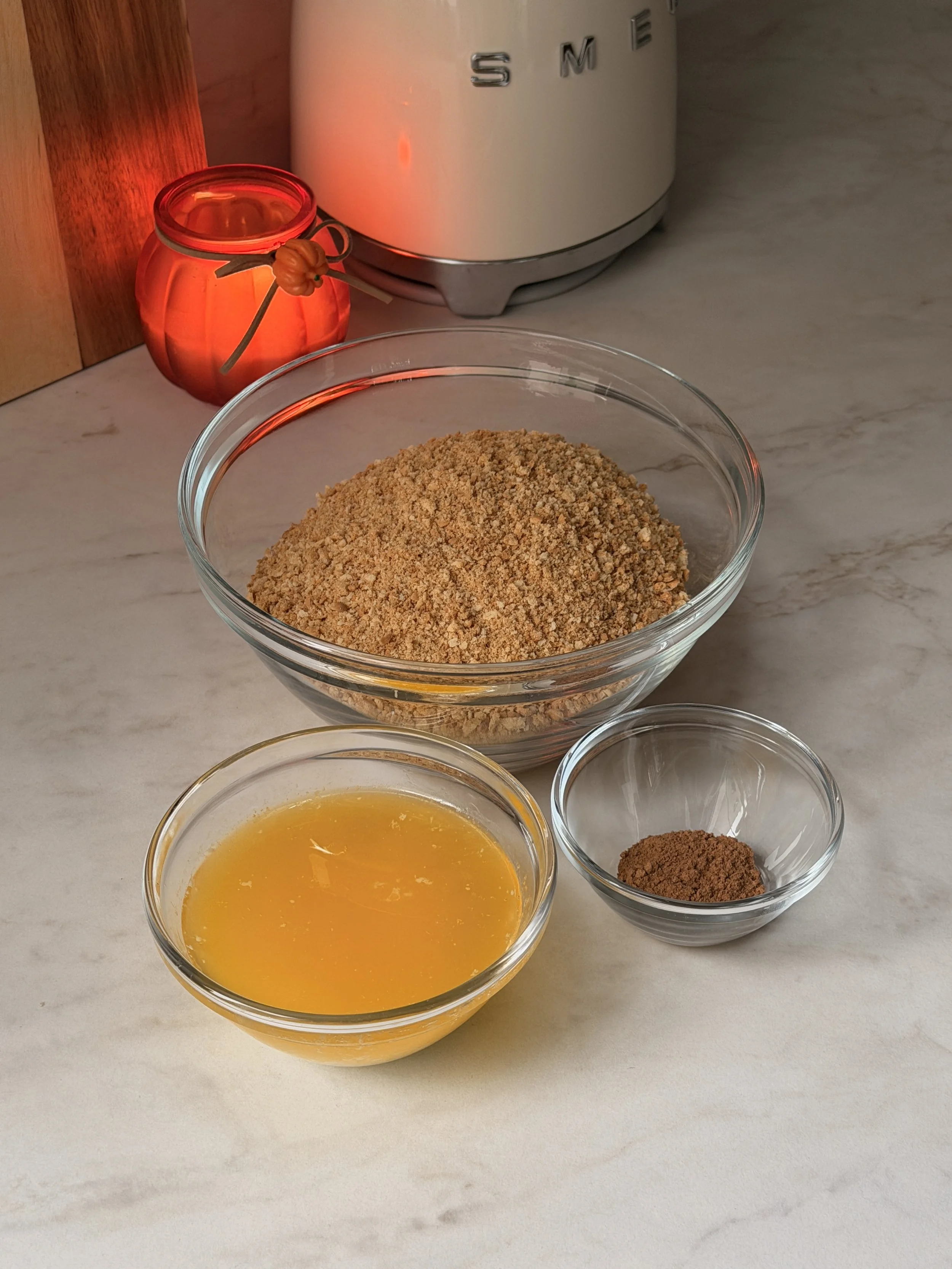
Graham crackers: Make sure the crackers are finely crushed using a food processor or a rolling pin so they combine evenly with the melted butter.
Unsalted butter: Helps bind the crushed graham crackers together.
Ground cinnamon: Adds a subtle warmth to the graham cracker crust, complementing the pumpkin spices in the cheesecake filling.
For the Pumpkin Spice Cheesecake Layer
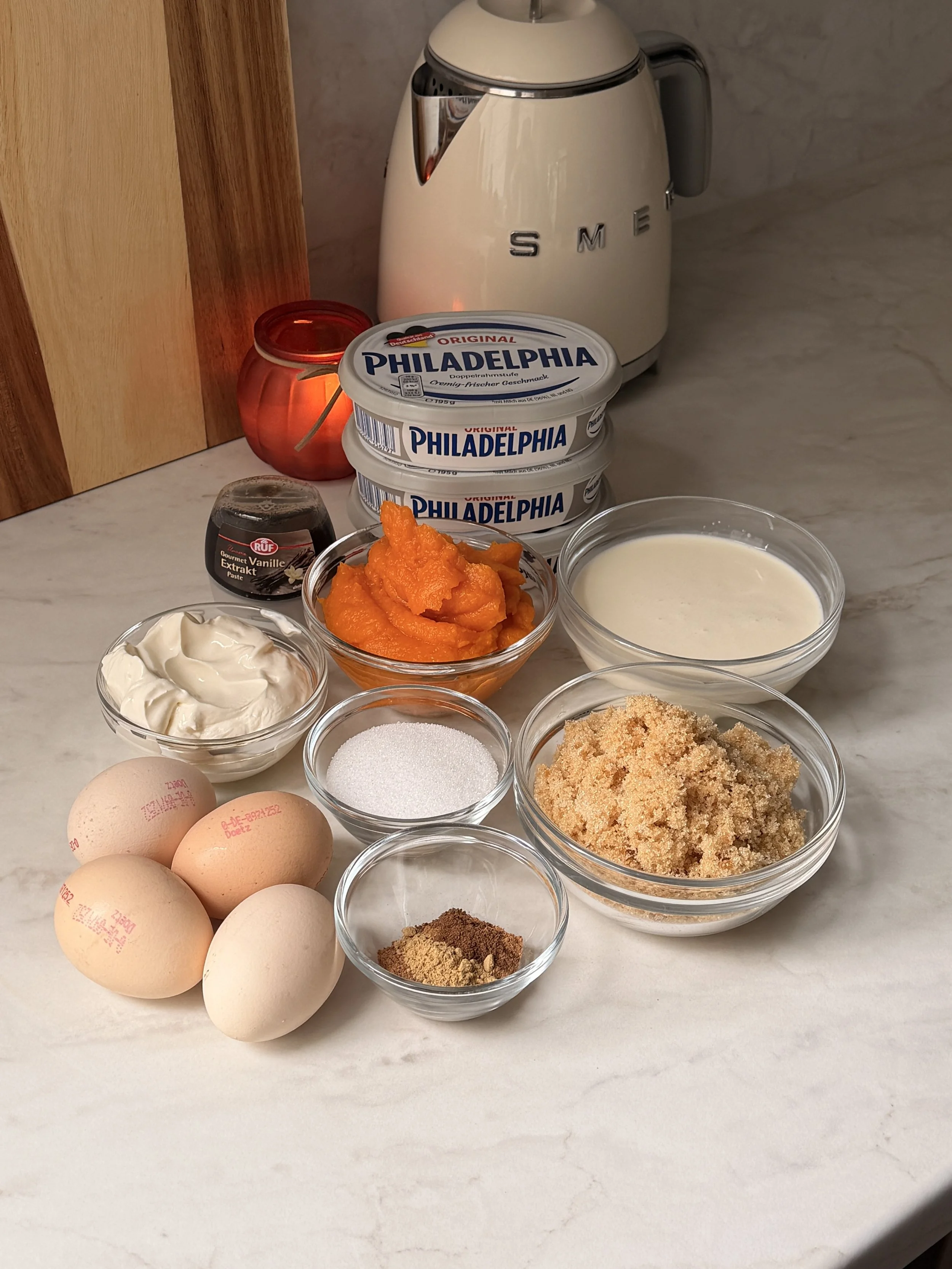
Full-fat cream cheese: The main ingredient in the cheesecake filling, responsible for its rich, creamy texture.
Pumpkin purée: Make sure you're using plain pumpkin purée rather than pumpkin pie filling, which contains additional sugar and spices. I recommend using a thick pumpkin purée rather than a very watery one, as excess moisture can affect how well the cheesecake sets.
Light brown sugar: Adds sweetness along with a subtle caramel-like flavor that pairs beautifully with the pumpkin and warm spices.
Granulated sugar: Adds additional sweetness while balancing the slightly tangy flavor of the cream cheese and sour cream.
Sour cream: Adds a gentle tanginess that complements the cream cheese while contributing to the cheesecake's smooth, creamy texture.
Large eggs: Help bind the ingredients together and provide structure to the cheesecake as it bakes. I recommend using large eggs at room temperature so they incorporate more easily into the batter. Add them one at a time and avoid overmixing to prevent incorporating too much air.
Large egg yolks: Add extra richness and contribute to the cheesecake's silky, custard-like texture. Don't forget to save the leftover egg whites for the Italian meringue topping.
Heavy cream: Adds richness and helps create a smooth, luxurious cheesecake filling.
Vanilla bean paste: You can substitute it with the same amount of vanilla extract if you don't have vanilla bean paste.
Spices: Cinnamon, Ginger, Nutmeg
For the Italian Meringue
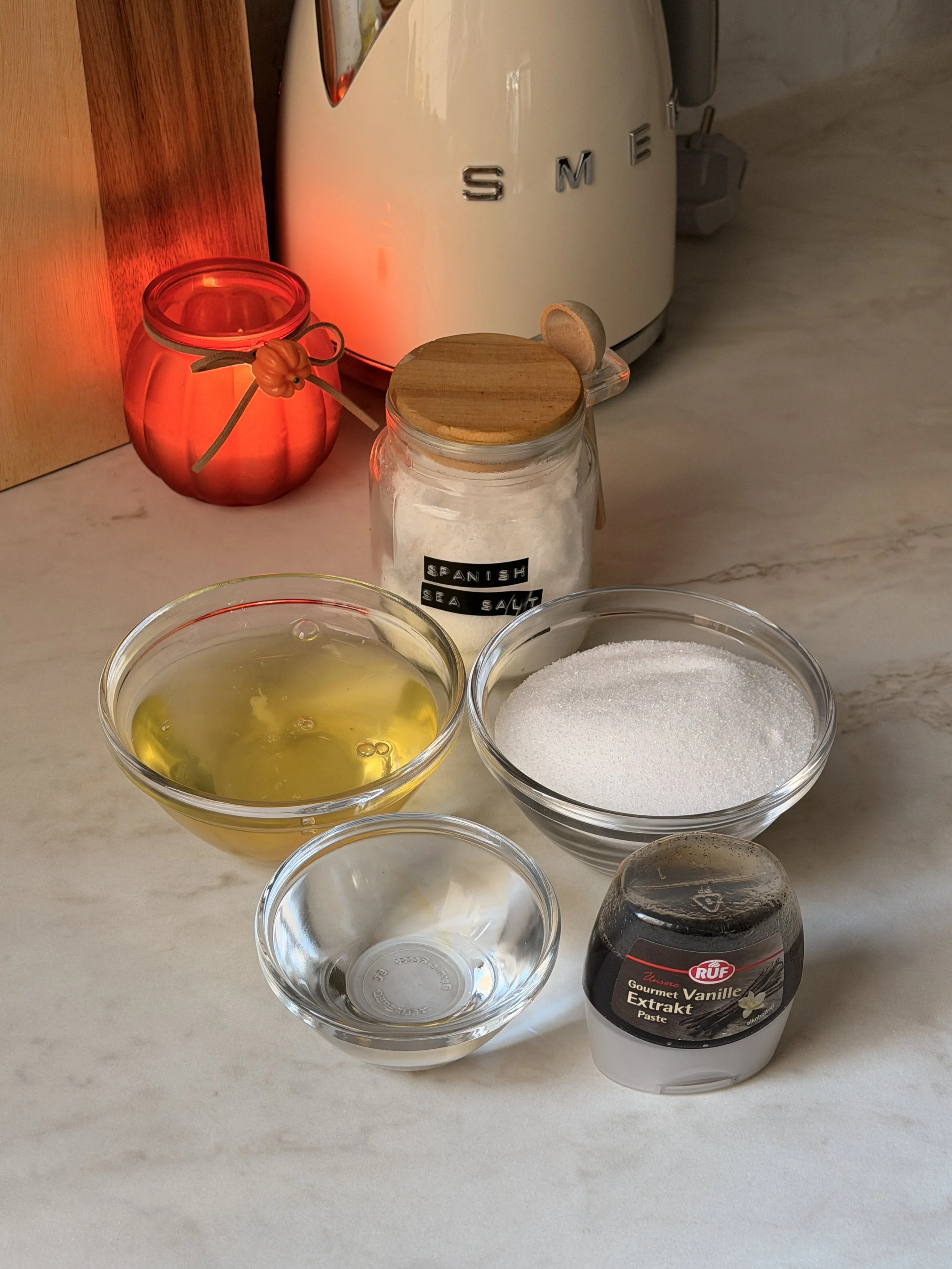
Large egg whites: You’ll need approximately 90 g of egg whites, which is usually equivalent to three large egg whites. Make sure the whites are completely free from any traces of egg yolk, as fat can prevent them from whipping properly.
Granulated sugar: Gives the Italian meringue its sweetness, glossy appearance and stable structure.
Water: Used to dissolve the sugar and create the hot syrup needed for the Italian meringue.
Vanilla bean paste: Adds a bit of vanilla flavor to the Italian Meringue.
Salt: Enchances the flavor.
Step By Step Instructions With Photos
1. First, prepare the crust.
2. Finely crush the graham crackers using a food processor or place them in a ziplock bag and crush them with a rolling pin.
3. In a medium bowl, combine the crushed graham crackers with the melted butter and mix until the mixture resembles wet sand.
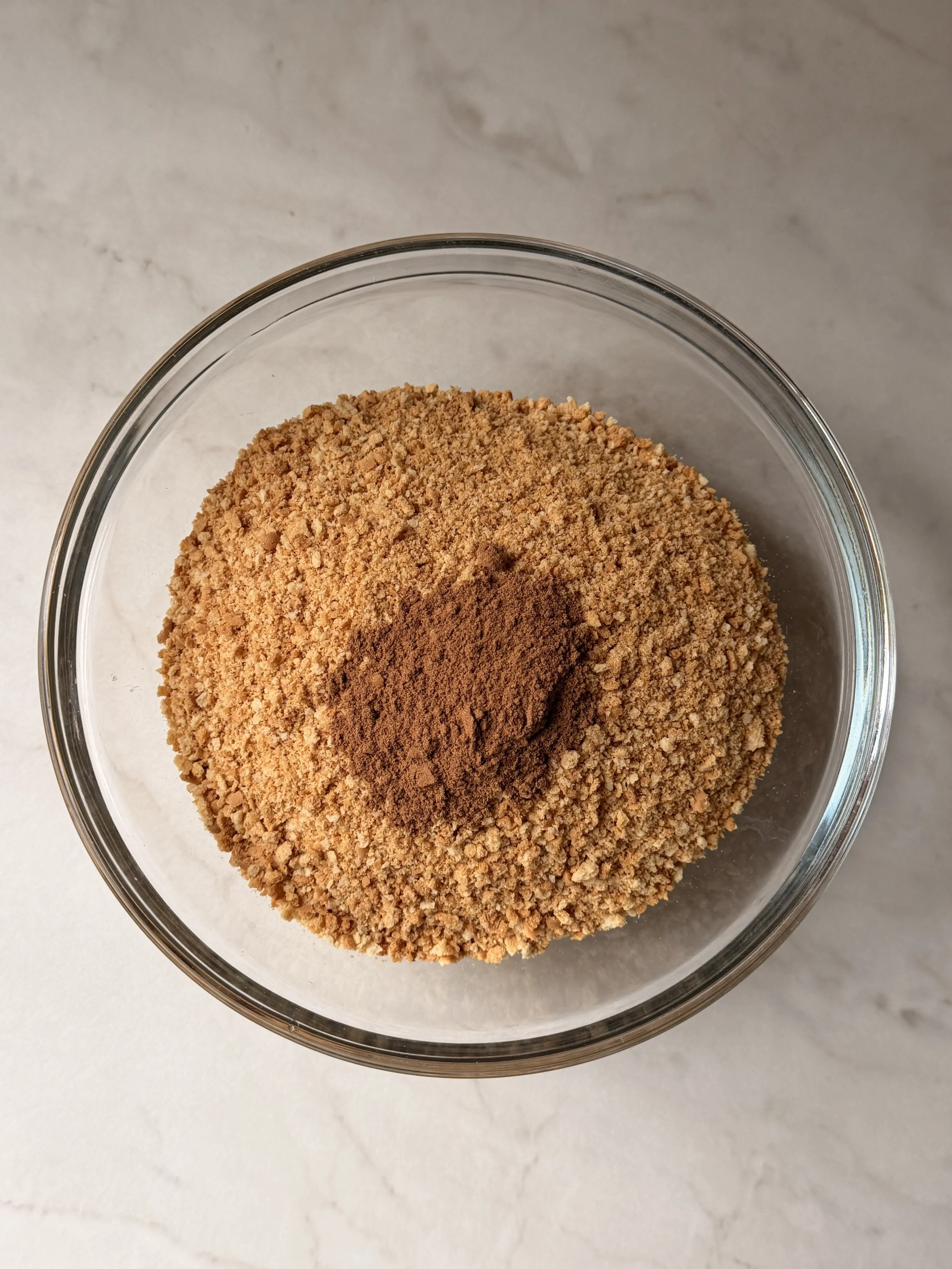
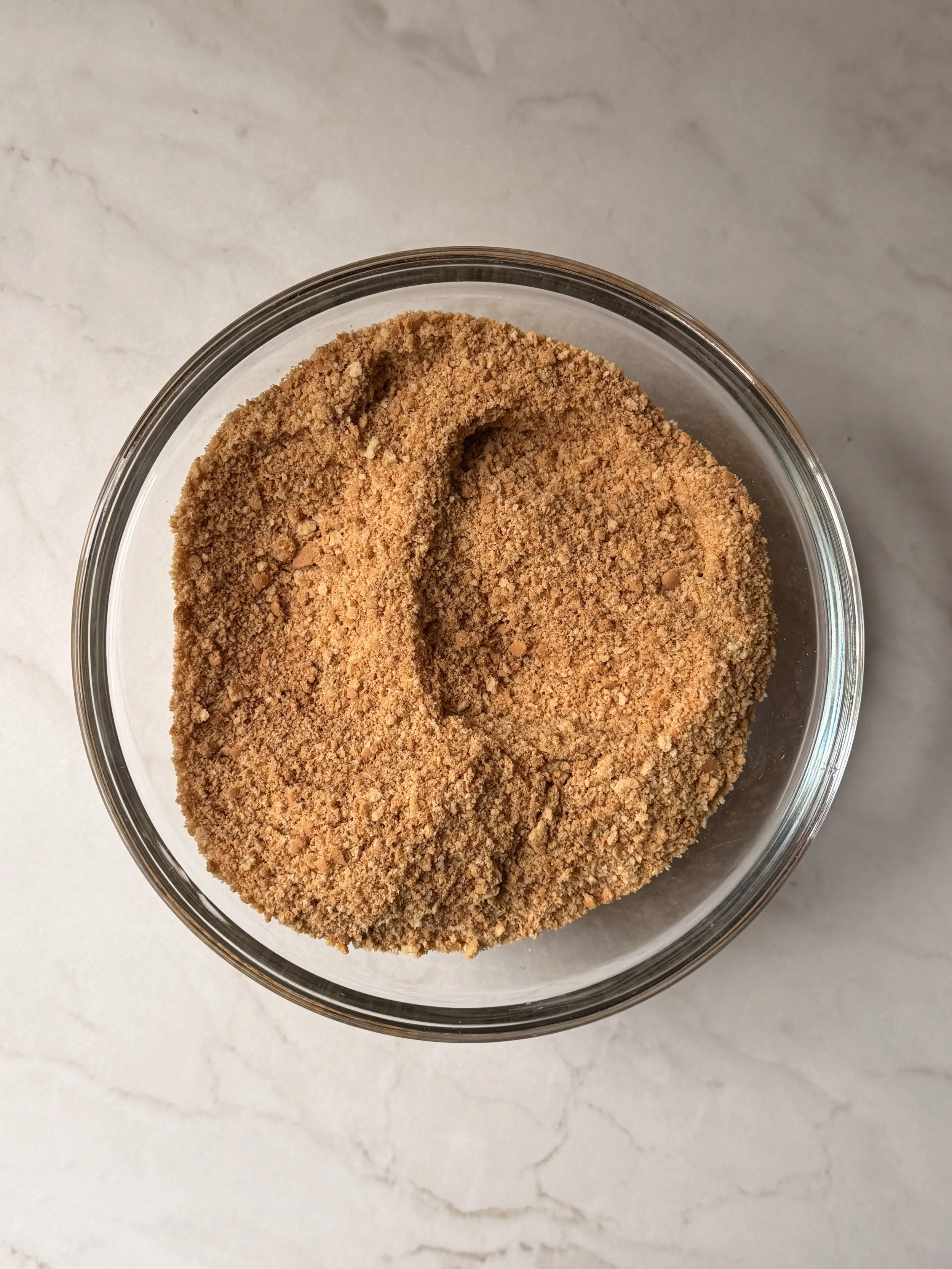
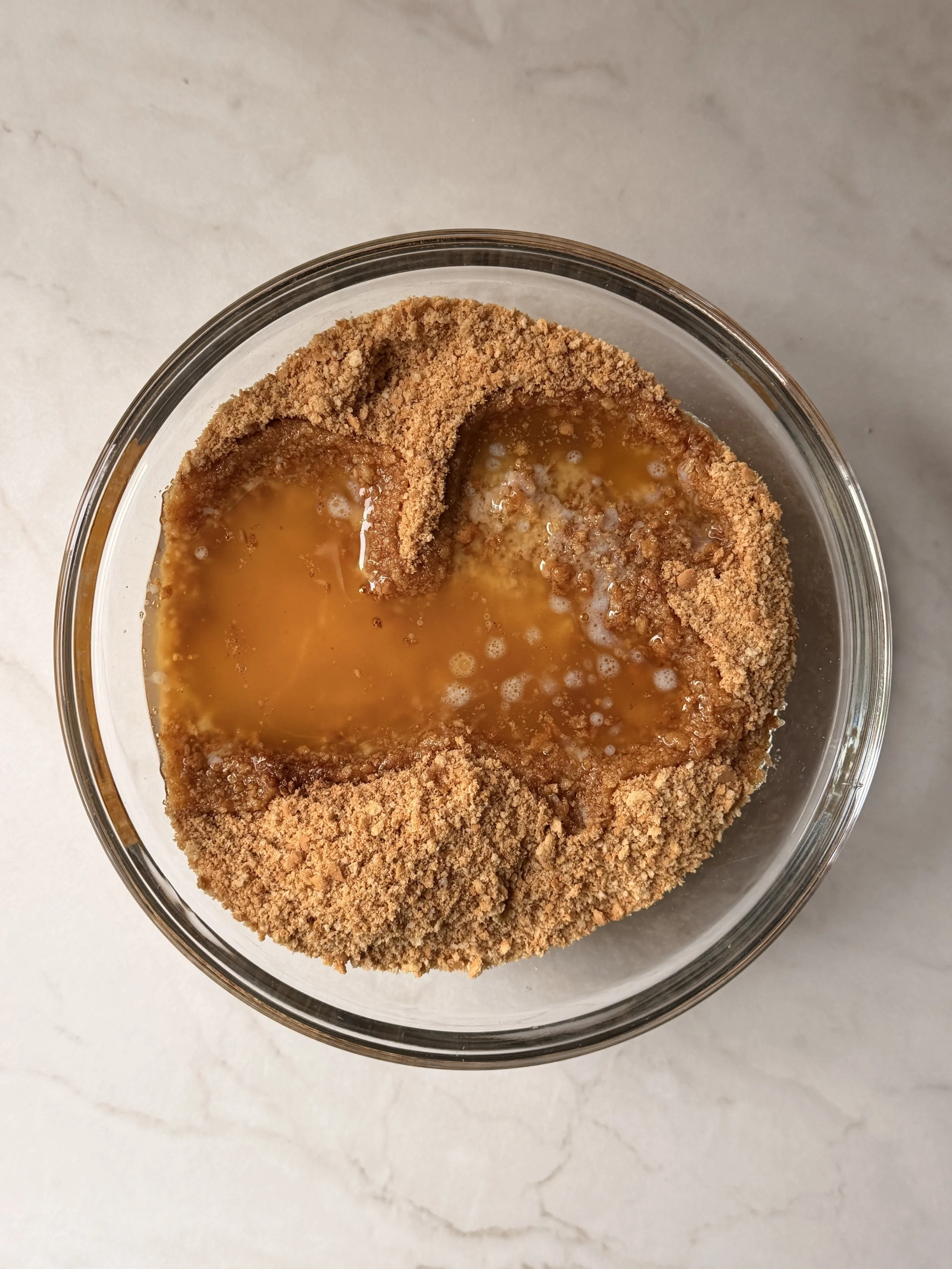
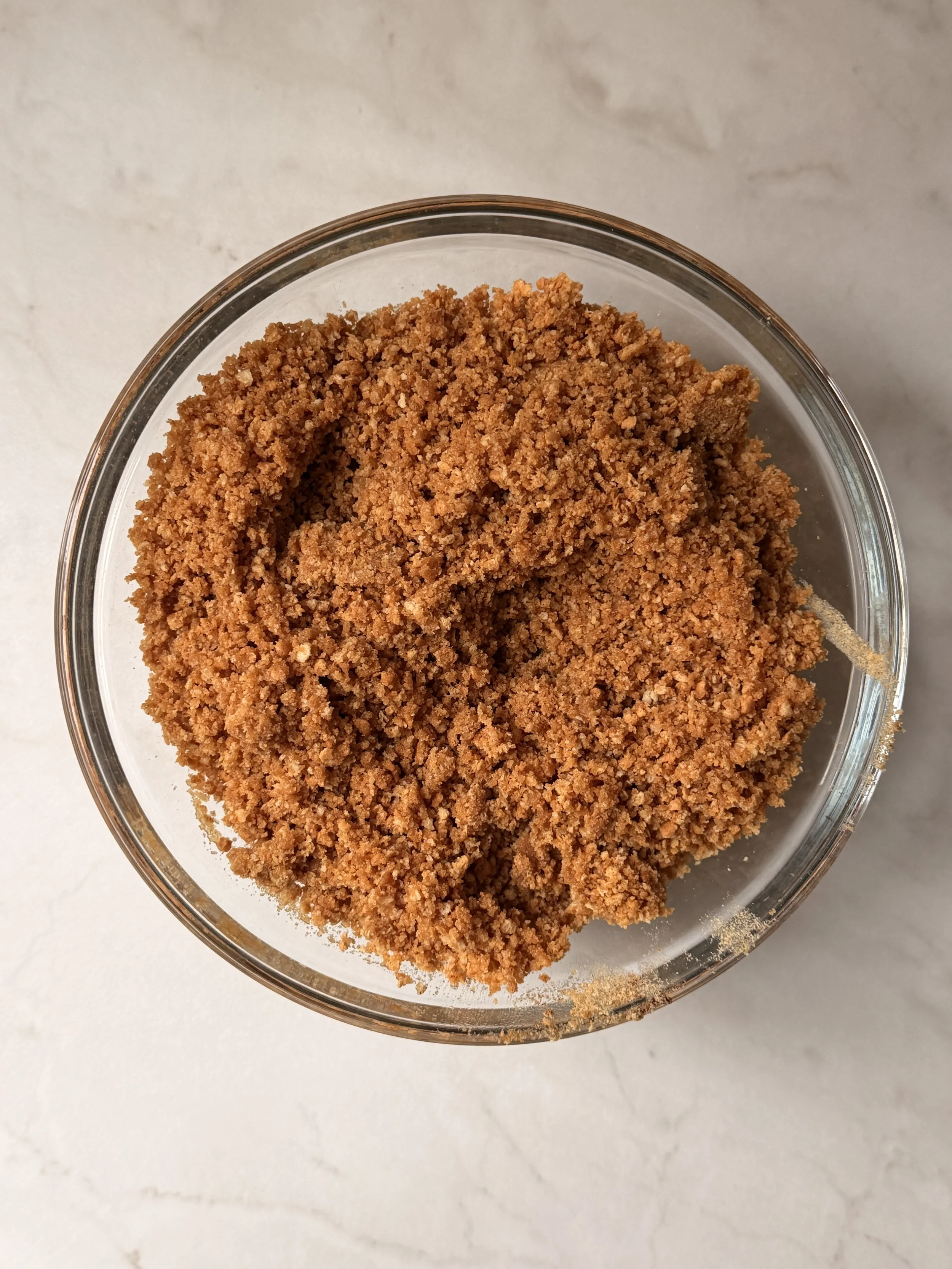
4. Transfer the mixture to a 22 cm (9-inch) round springform pan lined with parchment paper.
5. Press it firmly and evenly into the bottom of the pan to form a compact crust.
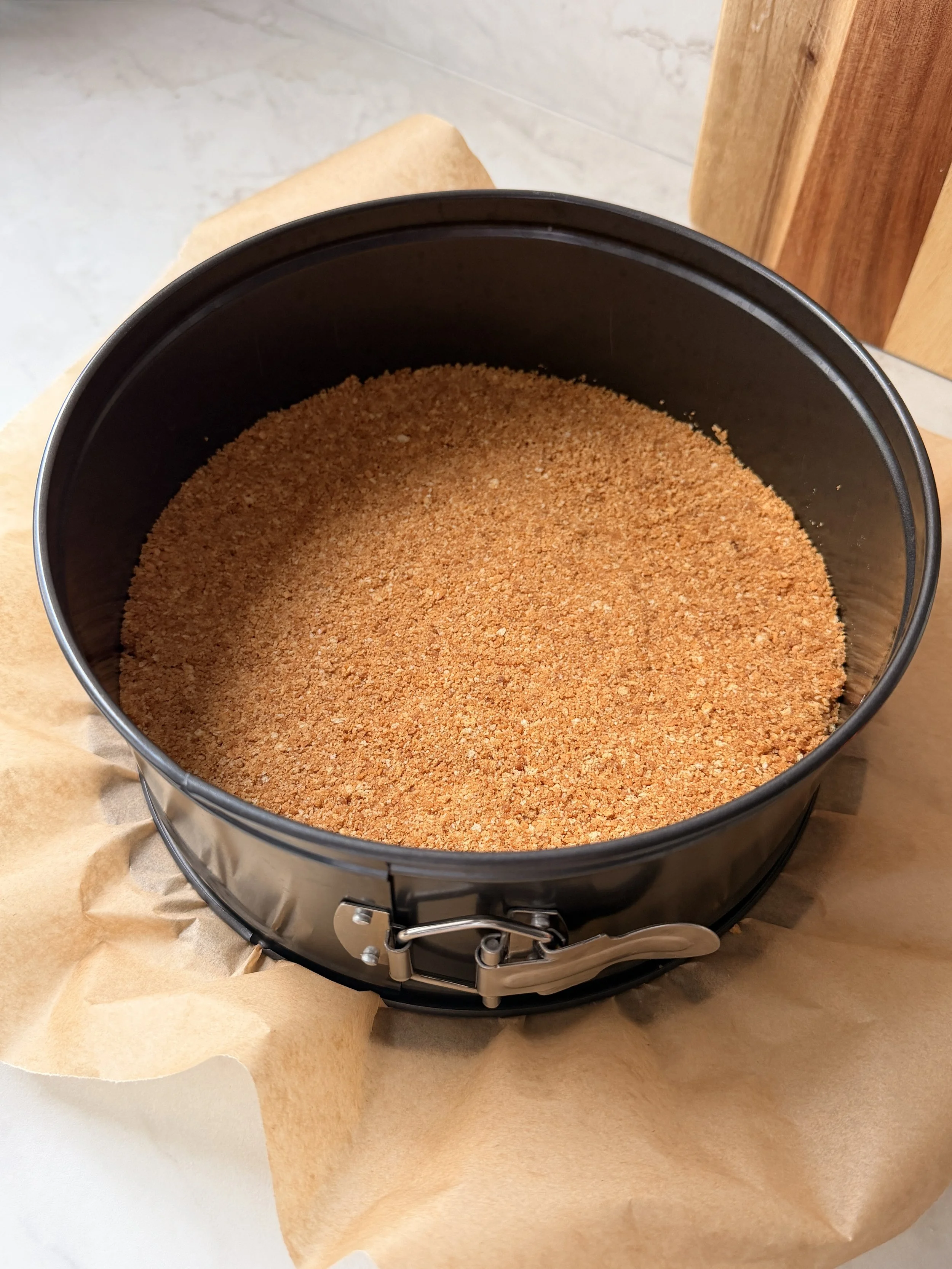
6. Once ready, place the crust in the refrigerator while you prepare the cheesecake filling.
7. Preheat your oven to 160°C (320°F). To create a steamy baking environment, place a separate baking pan filled with hot water on the lowest rack of your oven. This will help the cheesecake bake gently and evenly.
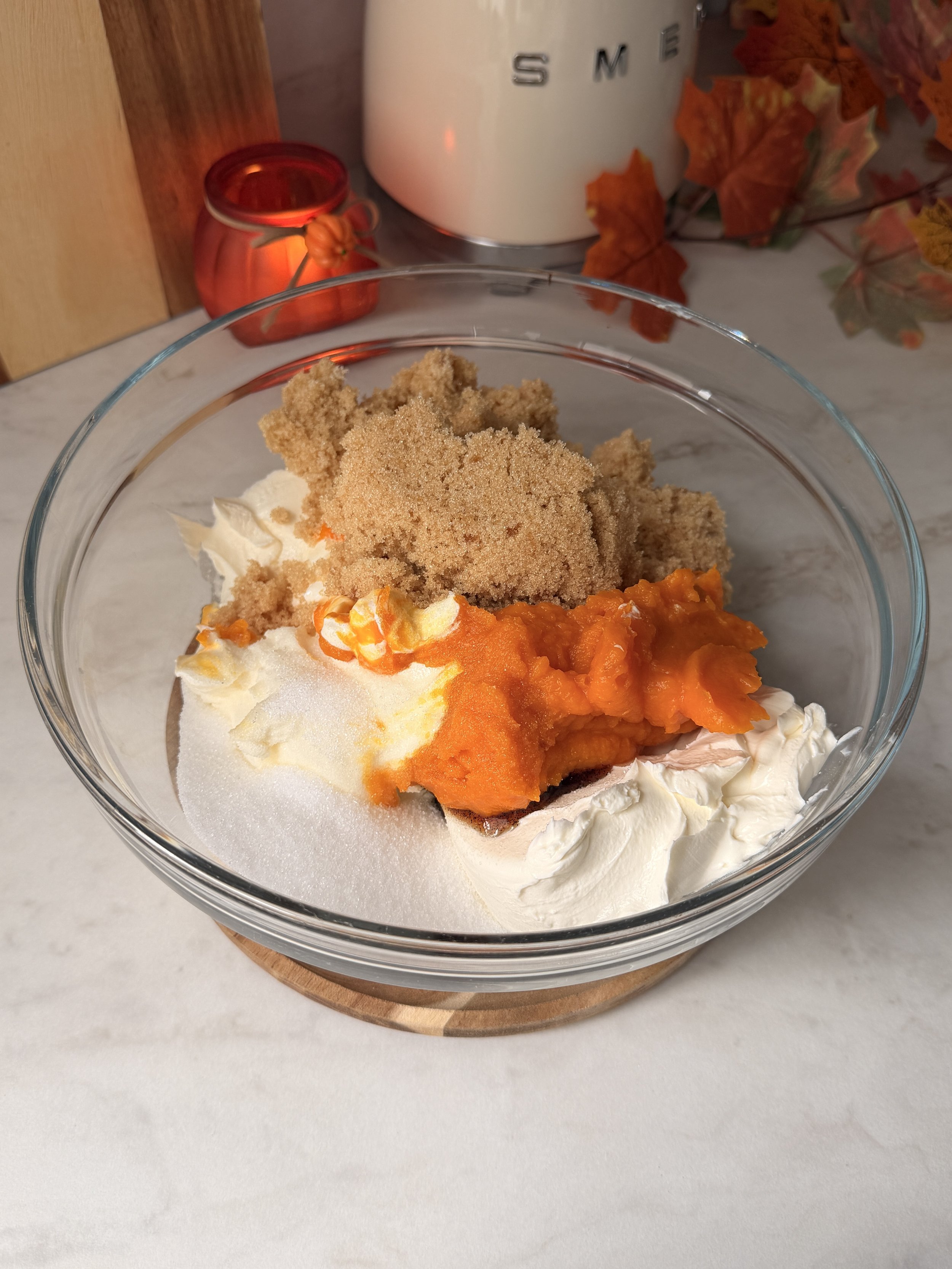
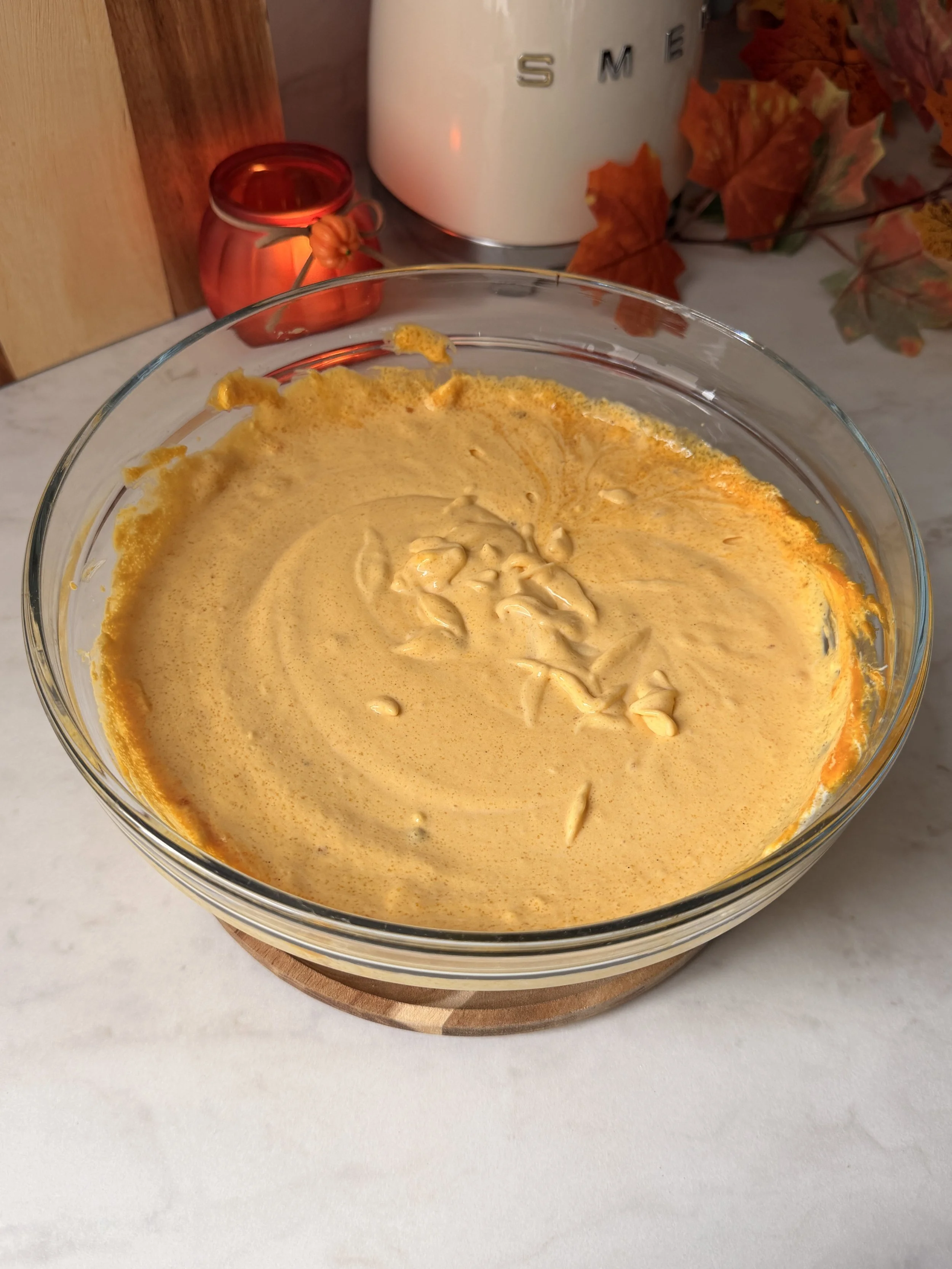
8. In a large bowl, combine the cream cheese, granulated sugar, light brown sugar, vanilla bean paste, pumpkin purée and sour cream. Mix until smooth and creamy.
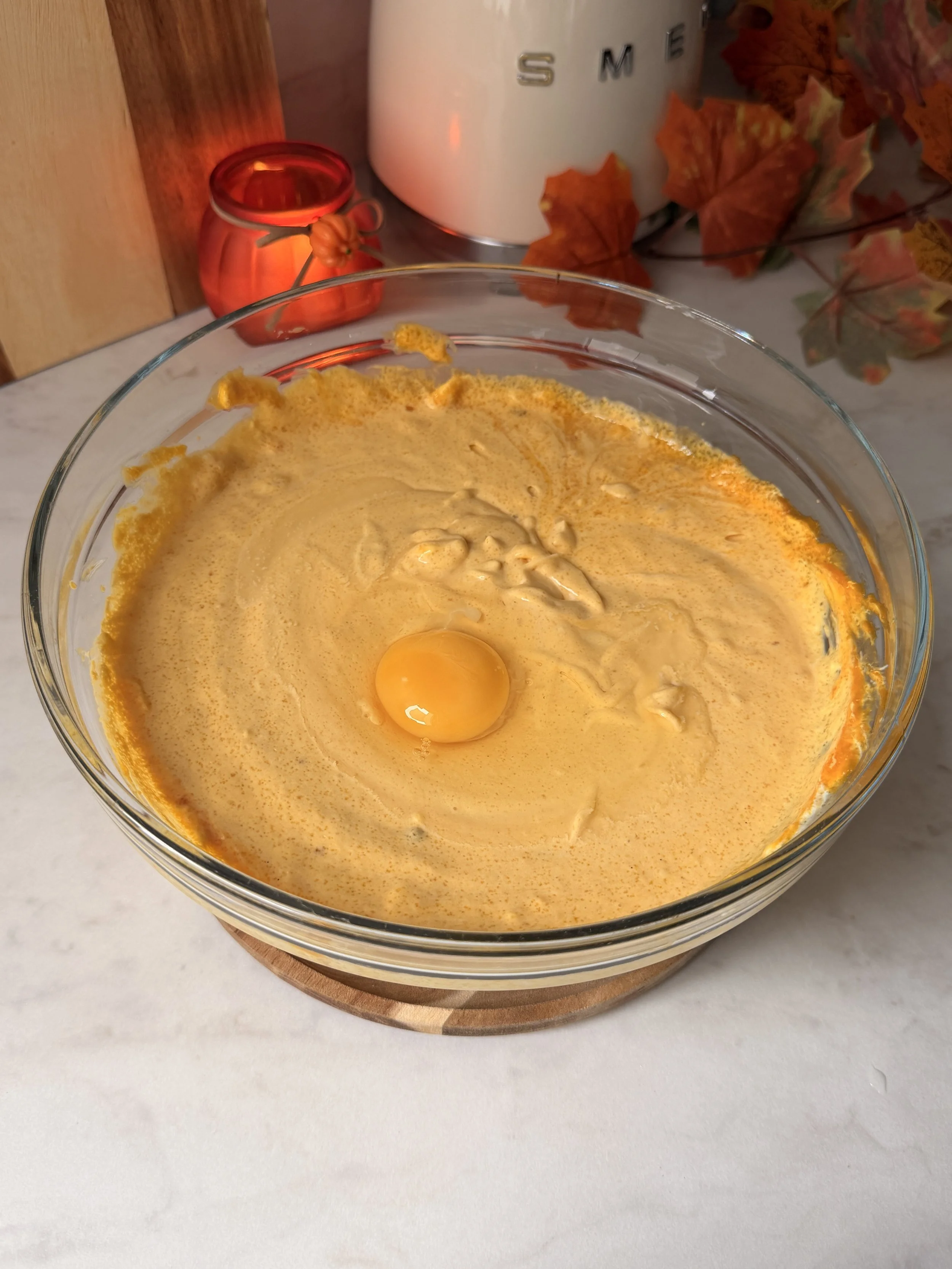
9. Add the eggs and egg yolks, one at a time, mixing gently after each addition until just incorporated. Be careful not to overmix the batter, as incorporating too much air can cause the cheesecake to crack during baking.
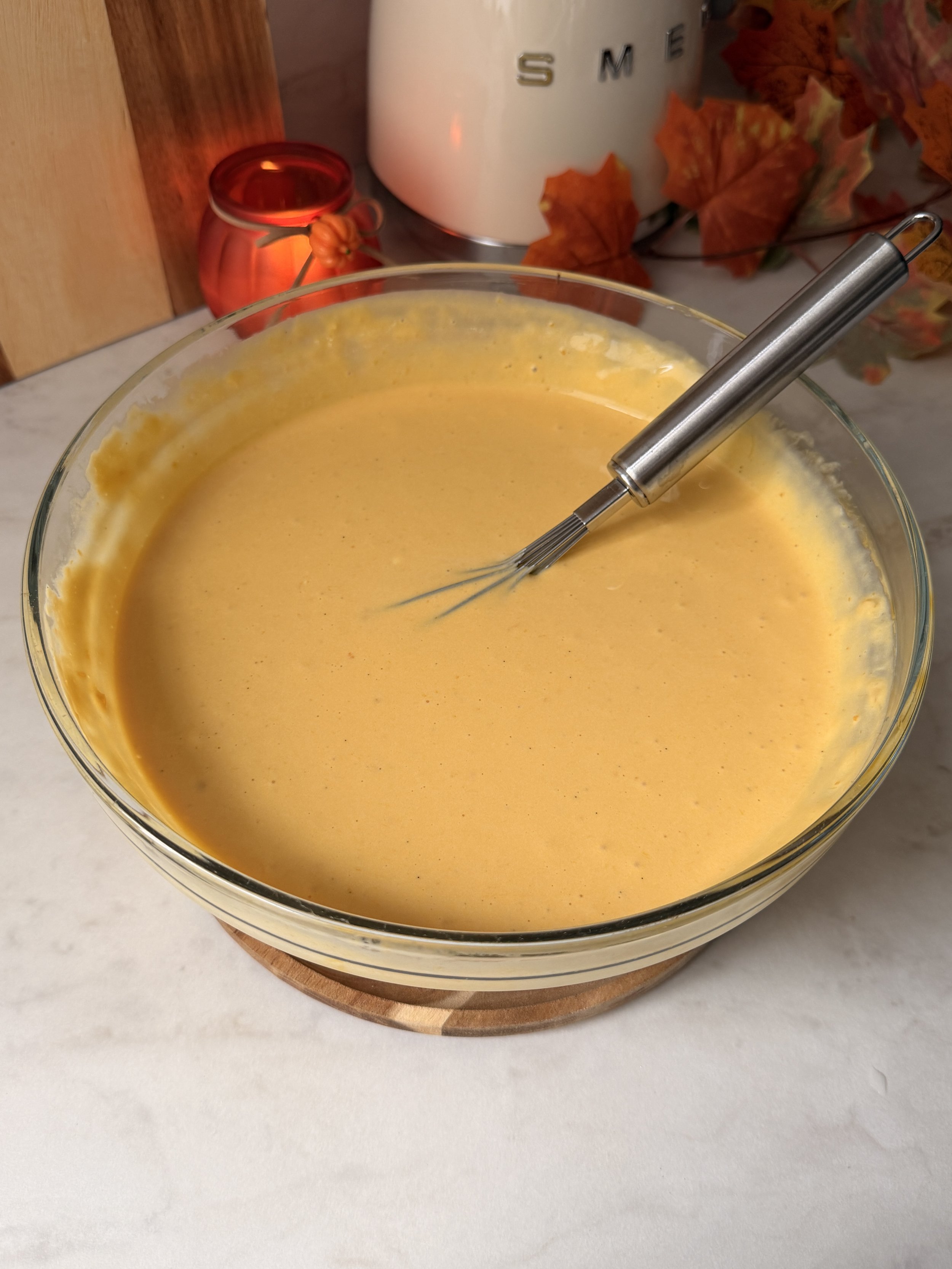
10. Lastly, add the heavy cream and spices. Mix gently until everything is combined.
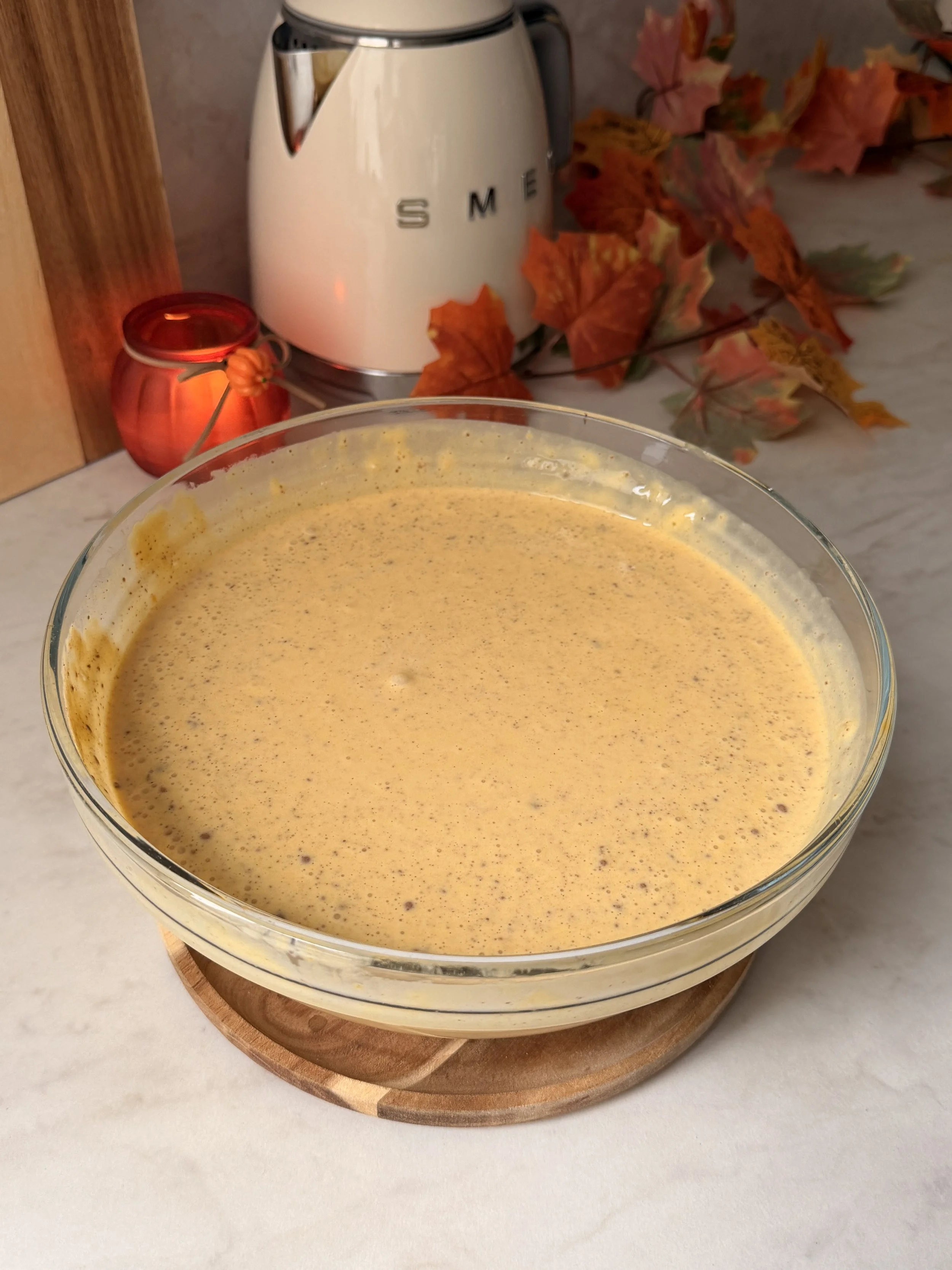
11. Remove the prepared crust from the refrigerator and pour the cheesecake batter through a fine mesh sieve over the crust. This will help remove any remaining lumps and create an extra smooth texture.
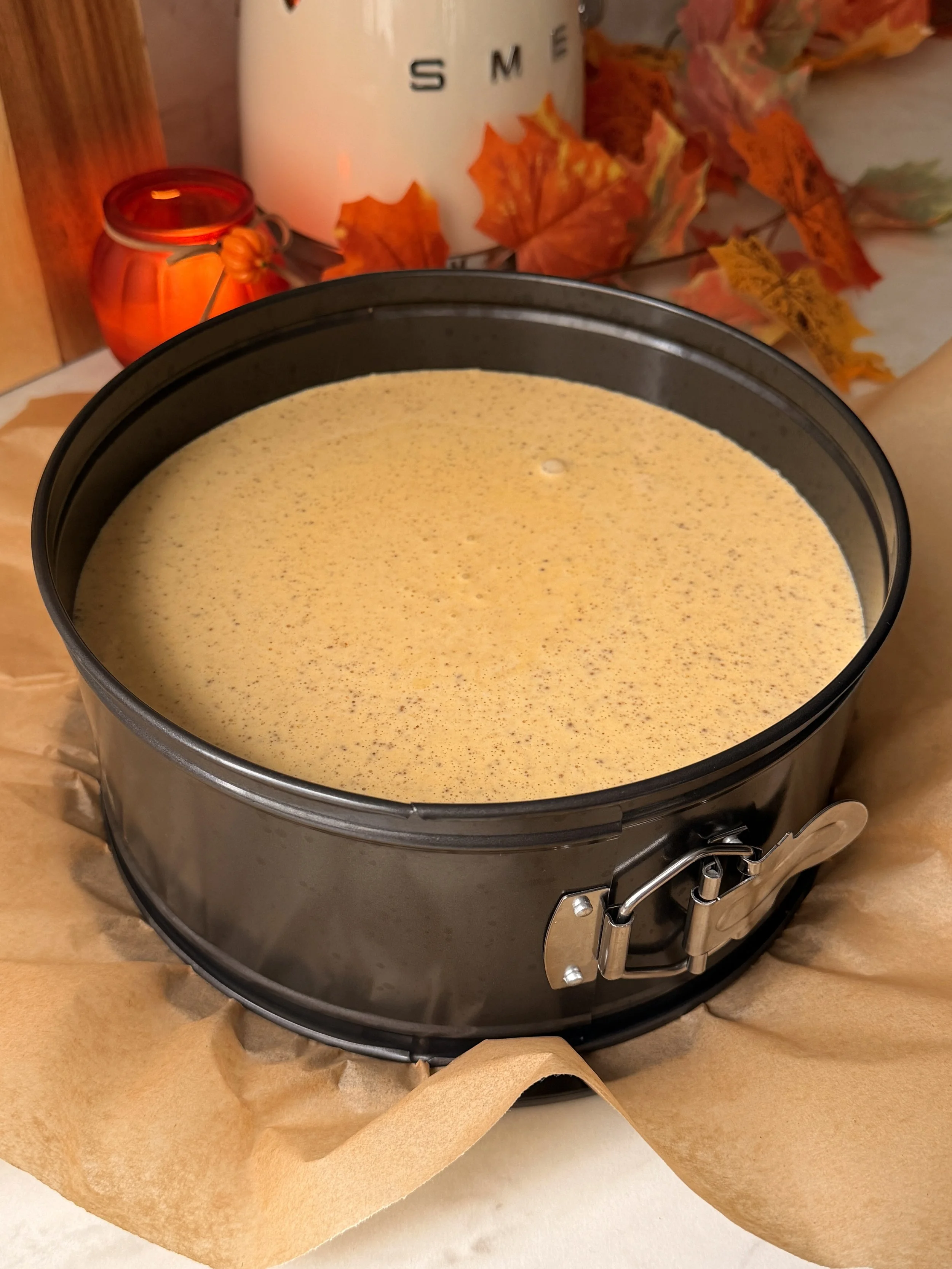
12. Place the cheesecake on the middle rack of your preheated oven and bake at 160°C (320°F) for approximately 65 minutes, or until the edges look set but the center still has a slight wobble when you gently shake the pan.
13. Once baked, turn off the oven and leave the oven door slightly open.
14. Allow the cheesecake to cool gradually inside the oven for 1 hour. This helps prevent sudden temperature changes that could cause cracks.
15. After 1 hour, remove the cheesecake from the oven and allow it to cool to room temperature. Once cooled, cover it with plastic wrap and refrigerate overnight or for at least 12 hours, until completely chilled and set.
16. The following day, prepare the Italian Meringue.
17. In a small saucepan, combine the granulated sugar and water. Heat over medium heat, without stirring, until the sugar syrup reaches 120°C (248°F) on a candy thermometer.
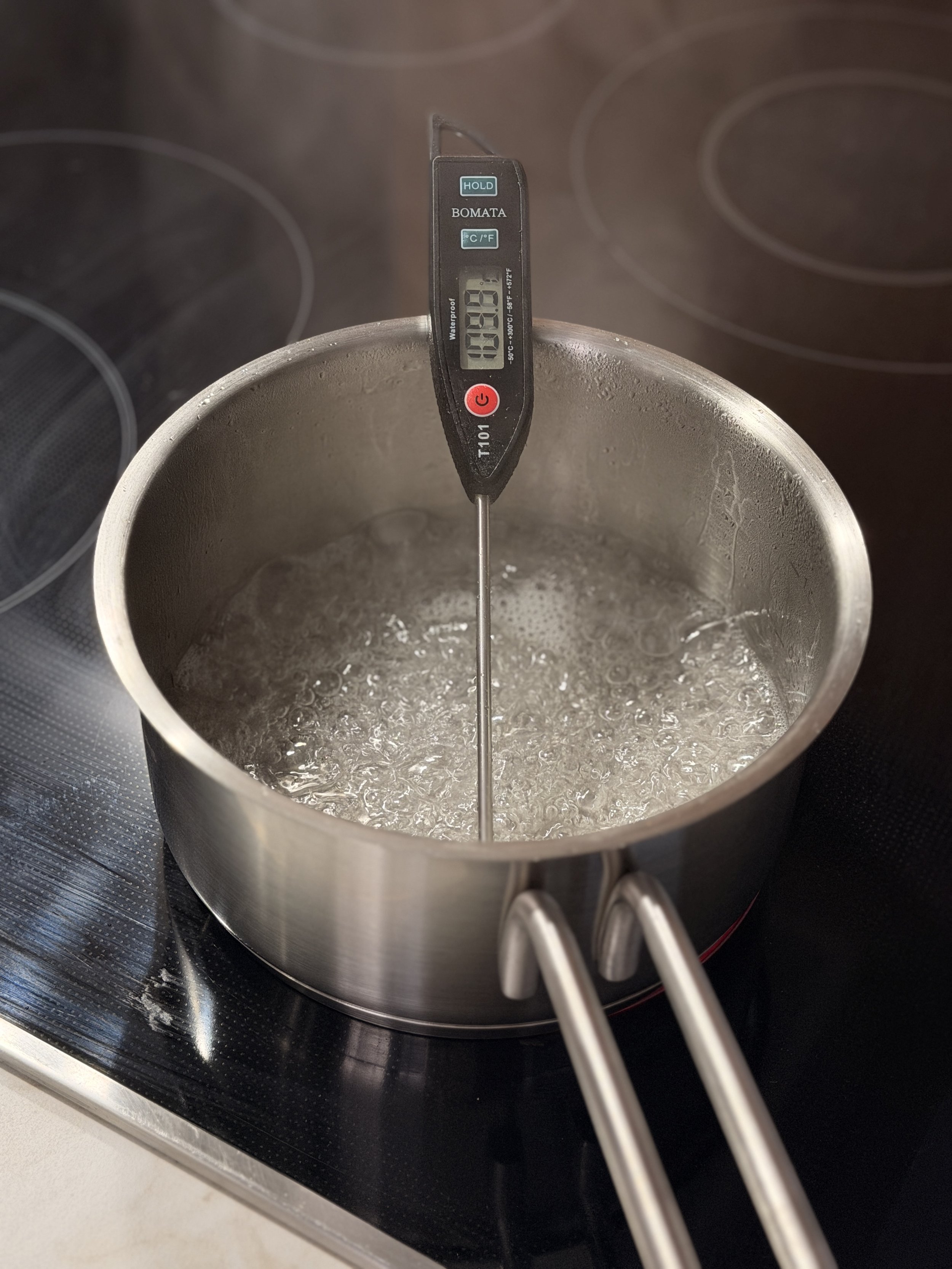
18. While the syrup is heating, begin whipping the egg whites in the bowl of a stand mixer fitted with the whisk attachment until soft peaks form.
19. Once the sugar syrup reaches 120°C (248°F), immediately remove it from the heat.
20. With the mixer running on low to medium speed, slowly and gradually pour the hot syrup into the egg whites in a thin, steady stream, avoiding the whisk attachment.
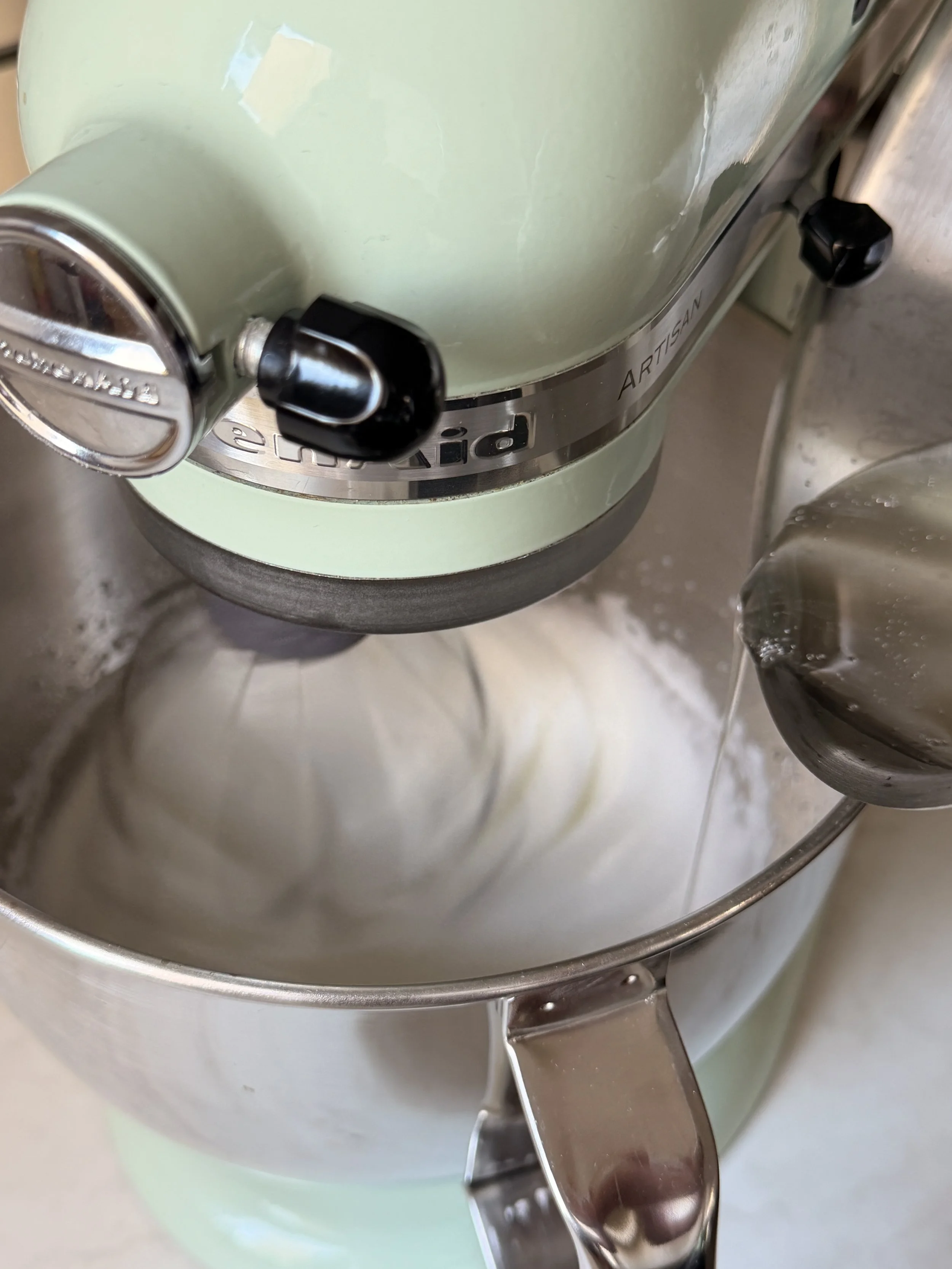
21. Once all the syrup has been incorporated, increase the mixer speed to medium-high and continue whipping for approximately 8 to 10 minutes, or until the meringue becomes thick, glossy and forms stiff peaks. The mixing bowl should also feel close to room temperature.
22. Once the meringue has cooled, add the vanilla bean paste and mix briefly until fully incorporated.
23. Remove the chilled cheesecake from the refrigerator and carefully release it from the springform pan.
24. Transfer it to a serving plate, then generously spread or pipe the Italian meringue over the top. Using a kitchen torch, gently toast the meringue until beautifully golden brown.
25. Slice, serve and enjoy!

Pumpkin Spice Cheesecake with Italian Meringue
This Pumpkin Spice Cheesecake with Italian Meringue is rich, creamy and full of warm pumpkin spice flavor. Made with a buttery graham cracker crust, a smooth pumpkin cheesecake filling and topped with fluffy, lightly toasted Italian meringue, it’s the perfect dessert for fall. Serve it for Thanksgiving, a cozy family gathering, or whenever you’re craving something special.
Ingredients
- 200g graham crackers, finely crushed (1 cup + 1/2 cup)
- 100g unsalted butter, melted (7 tablespoons)
- 1 teaspoon of ground cinnamon
- 600g full-fat cream cheese (2 cups + 2/3 cup)
- 200g pumpkin purée (3/4 cup + 1 tablespoon)
- 170g light brown sugar (3/4 cup + 1 teaspoon)
- 50g granulated sugar (1/4 cup)
- 120g sour cream (1/2 cup)
- 2 large eggs
- 2 large egg yolks (save the whites for the Meringue)
- 200g heavy cream (32% fat)
- 1 teaspoon vanilla bean paste
- 2 teaspoons of ground cinnamon
- 1 teaspoon ground ginger
- 1/2 teaspoon ground nutmeg
- 3 large egg whites (90g)
- 150g granulated sugar (3/4 cup)
- 80g water (1/3 cup)
- 1 teaspoon vanilla bean paste
- A pinch of salt
Instructions
- First, prepare the crust.
- Finely crush the graham crackers using a food processor or place them in a ziplock bag and crush them with a rolling pin.
- In a medium bowl, combine the crushed graham crackers with the melted butter and mix until the mixture resembles wet sand.
- Transfer the mixture to a 22 cm (9-inch) round springform pan lined with parchment paper.
- Press it firmly and evenly into the bottom of the pan to form a compact crust.
- Once ready, place the crust in the refrigerator while you prepare the cheesecake filling.
- Preheat your oven to 160°C (320°F). To create a steamy baking environment, place a separate baking pan filled with hot water on the lowest rack of your oven. This will help the cheesecake bake gently and evenly.
- In a large bowl, combine the cream cheese, granulated sugar, light brown sugar, vanilla bean paste, pumpkin purée and sour cream. Mix until smooth and creamy.
- Add the eggs and egg yolks, one at a time, mixing gently after each addition until just incorporated. Be careful not to overmix the batter, as incorporating too much air can cause the cheesecake to crack during baking.
- Lastly, add the heavy cream and spices. Mix gently until everything is combined.
- Remove the prepared crust from the refrigerator and pour the cheesecake batter through a fine mesh sieve over the crust. This will help remove any remaining lumps and create an extra smooth texture.
- Place the cheesecake on the middle rack of your preheated oven and bake at 160°C (320°F) for approximately 65 minutes, or until the edges look set but the center still has a slight wobble when you gently shake the pan.
- Once baked, turn off the oven and leave the oven door slightly open.
- Allow the cheesecake to cool gradually inside the oven for 1 hour. This helps prevent sudden temperature changes that could cause cracks.
- After 1 hour, remove the cheesecake from the oven and allow it to cool to room temperature. Once cooled, cover it with plastic wrap and refrigerate overnight or for at least 12 hours, until completely chilled and set.
- The following day, prepare the Italian Meringue.
- In a small saucepan, combine the granulated sugar and water. Heat over medium heat, without stirring, until the sugar syrup reaches 120°C (248°F) on a candy thermometer.
- While the syrup is heating, begin whipping the egg whites in the bowl of a stand mixer fitted with the whisk attachment until soft peaks form.
- Once the sugar syrup reaches 120°C (248°F), immediately remove it from the heat.
- With the mixer running on low to medium speed, slowly and gradually pour the hot syrup into the egg whites in a thin, steady stream, avoiding the whisk attachment.
- Once all the syrup has been incorporated, increase the mixer speed to medium-high and continue whipping for approximately 8 to 10 minutes, or until the meringue becomes thick, glossy and forms stiff peaks. The mixing bowl should also feel close to room temperature.
- Once the meringue has cooled, add the vanilla bean paste and mix briefly until fully incorporated.
- Remove the chilled cheesecake from the refrigerator and carefully release it from the springform pan.
- Transfer it to a serving plate, then generously spread or pipe the Italian meringue over the top. Using a kitchen torch, gently toast the meringue until beautifully golden brown.
- Slice, serve and enjoy!