Published: November 15, 2026
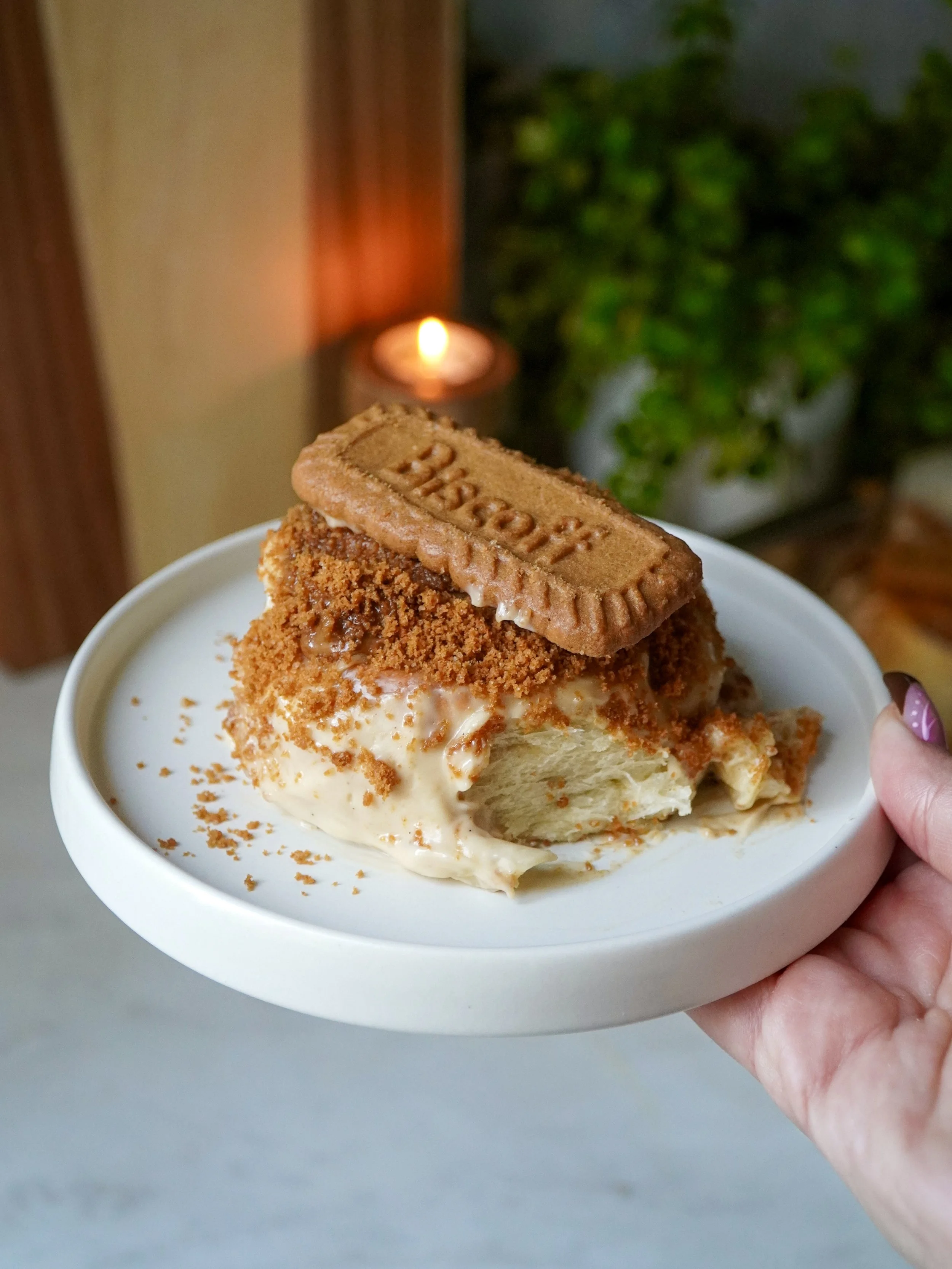
These homemade Biscoff Cinnamon Rolls are soft, fluffy and packed with the delicious caramelized flavor of Biscoff cookies. Made with a soft, buttery dough, a generous Biscoff cinnamon filling and topped with a creamy Biscoff cream cheese frosting, they're perfect for anyone who loves Cinnamon Rolls with a little twist.
WHY YOU’LL LOVE THIS RECIPE
🤎Soft and fluffy texture - These homemade Cinnamon Rolls are incredibly soft, with a light, pillowy dough.
🤎Rich Biscoff flavor - Made with Biscoff spread and crushed Biscoff cookies, every bite is packed with that delicious caramelized cookie flavor.
🤎Creamy Biscoff frosting - Finished with a smooth cream cheese frosting made with Biscoff spread for an extra layer of flavor.
🤎Perfectly gooey centers - A little heavy cream poured over the rolls before baking helps keep them soft and moist.
🤎Perfect for sharing - This recipe makes a generous batch of homemade Cinnamon Rolls, ideal for family breakfasts, brunch gatherings or sharing with friends.
🤎A delicious twist on a classic - If you love traditional Cinnamon Rolls, this Biscoff version is a fun way to enjoy a familiar favorite with a different flavor.

Tips & Tricks
→ Do not skip either proofing time - Proper proofing is one of the most important steps when making soft, fluffy Cinnamon Rolls. This recipe requires two separate proofing stages. The first takes place after kneading the dough, allowing the yeast to work and the dough to double in size. The second proof happens after shaping and arranging the Cinnamon Rolls in your baking pan. This allows the rolls to become light, airy and beautifully puffy before baking. Skipping either stage can result in dense, heavy Cinnamon Rolls instead of the soft, pillowy texture we're looking for. Always pay attention to how the dough looks rather than relying entirely on the clock, as proofing times can vary depending on the temperature of your kitchen.
→ Make sure the milk is lukewarm - When preparing the dough, make sure your milk is lukewarm rather than hot or cold. Ideally the temperature should be around 35-38°C, which is warm enough to support yeast activity without damaging it. Milk that is too hot can kill the yeast, preventing your dough from rising properly, while cold milk can significantly slow down the proofing process. If you don't have a kitchen thermometer, the milk should feel comfortably warm to the touch, never hot.
→ Use softened butter for the dough - Make sure your butter is softened to room temperature before incorporating it into the dough. Softened butter blends much more easily into the dough during kneading, helping create a smooth, elastic texture. Cold butter can be difficult to incorporate evenly. I recommend taking the butter out of the refrigerator approximately 30-60 minutes before starting the recipe, depending on the temperature of your kitchen.
→ Melt the Biscoff spread before adding it to the filling - Biscoff spread can be quite thick at room temperature, which makes it difficult to spread evenly over soft Cinnamon Roll dough. To make the process easier, gently warm the Biscoff spread in the microwave for 30-60 seconds until it becomes smooth and spreadable. This allows you to spread it into an even layer without pulling or tearing the dough.
→ Do not skip the heavy cream before baking - Pouring heavy cream over the Cinnamon Rolls just before baking is one of my favorite tricks for achieving incredibly soft, moist and gooey Cinnamon Rolls. As the rolls bake, the cream settles into the spaces between them, adding moisture and richness while helping prevent the edges from drying out.
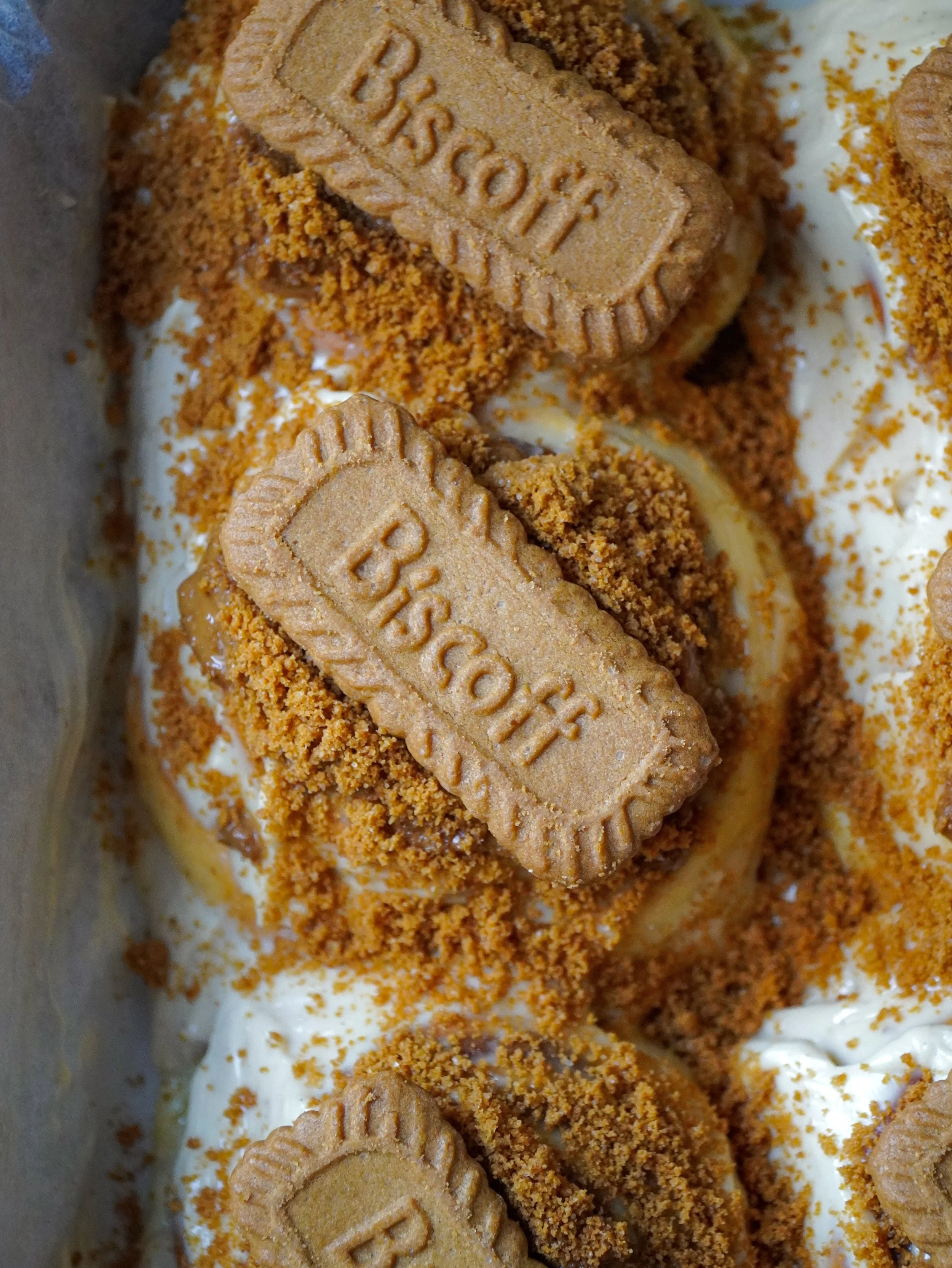
→ Add the frosting while the Cinnamon Rolls are still hot - Unlike some baked goods that need to cool completely before frosting, these Biscoff Cinnamon Rolls are best frosted immediately after coming out of the oven. The heat from the freshly baked rolls gently melts the Biscoff cream cheese frosting, allowing it to spread into the swirls and create a deliciously gooey finish.
→ Avoid overbaking the Cinnamon Rolls - Overbaking is one of the most common reasons homemade Cinnamon Rolls turn out dry or tough. Keep a close eye on them during the final minutes of baking, as even a few extra minutes can make a noticeable difference in their texture. If the tops are browning too quickly but the centers still need more time, loosely cover the baking pan with aluminum foil and continue baking until done.
→ Baking times may vary depending on your baking pan - The material of your baking pan can make a noticeable difference in how quickly and evenly your Cinnamon Rolls bake. Metal baking pans generally conduct heat efficiently, allowing the rolls to bake more quickly and develop golden edges. Ceramic baking dishes tend to heat up more slowly and retain heat for longer, which means the Cinnamon Rolls may require a few additional minutes in the oven. Glass baking dishes also heat differently from metal and can continue cooking the rolls after being removed from the oven because they retain heat. Regardless of which pan you're using, I recommend checking the rolls a few minutes before the suggested baking time and adjusting as needed.
→ Knead the dough until smooth and elastic - Proper kneading helps develop the gluten structure needed for soft, fluffy Cinnamon Rolls. When using a stand mixer fitted with a dough hook, knead the dough on low speed until it becomes smooth, elastic and slightly tacky to the touch. The dough should pull away from the sides of the mixing bowl while remaining soft. Avoid adding extra flour during kneading, even if the dough feels slightly sticky at first. Adding too much flour can make the finished Cinnamon Rolls dense and dry rather than soft and pillowy.
→ Roll the dough into an even rectangle - When shaping your Cinnamon Rolls, try to roll the dough into a rectangle with an even thickness throughout. This helps ensure that each Cinnamon Roll has a similar number of swirls and bakes evenly. If some areas of the dough are significantly thicker than others, you may end up with unevenly sized rolls.
→ Leave enough space between the rolls for the second proof - When arranging your Cinnamon Rolls in the baking pan, leave a little space between each one so they have room to expand during their second proof. As the dough rises, the rolls will become puffier and gradually fill the gaps between them. If they're packed too tightly from the beginning, they may rise unevenly or become overly compressed. Allowing enough space helps the rolls bake more evenly while maintaining their soft, fluffy texture.
→ Use a kitchen scale for accurate measurements - When working with yeast dough, accurate measurements are especially important for achieving the right consistency. Too much flour can result in dry, dense Cinnamon Rolls, while incorrect amounts of liquid can make the dough difficult to handle. I always recommend using a kitchen scale rather than measuring cups, as measuring your ingredients by weight will help you achieve consistent results every time you prepare this recipe.
Frequently Asked Questions (FAQs)
1. How do I store the Biscoff Cinnamon Rolls?
Because of the cream cheese frosting, these Cinnamon Rolls should be stored in the refrigerator for up to 3 days, tightly covered with plastic wrap or placed inside an airtight container. Keep in mind that the rolls will become slightly firmer when refrigerated, which is completely normal. Before serving, I recommend warming them in the microwave for approximately 15-20 seconds, or until gently warmed through. This helps bring back their soft, fluffy texture while making the Biscoff cream cheese frosting deliciously creamy and gooey again.
2. Can I freeze the Cinnamon Rolls?
Yes! You can freeze the unbaked Cinnamon Rolls after the first proof and once you've rolled, filled and sliced them into individual rolls. Arrange them on a parchment-lined baking tray and freeze until solid, then transfer them to a freezer-safe container or bag. Store in the freezer for up to 1 month. When you're ready to bake, transfer the frozen Cinnamon Rolls to the refrigerator and allow them to thaw overnight. The following day, arrange them in your baking pan, cover loosely and let them come to room temperature while completing their second proof. Once they've become noticeably puffy, pour the heavy cream over them and bake according to the recipe instructions. Keep in mind that the second proof may take longer than usual.
3. Can I prepare the cinnamon rolls the night before?
Absolutely! If you'd like freshly baked Cinnamon Rolls in the morning without having to prepare everything from scratch, you can make them the evening before. Prepare the dough, allow it to complete its first proof, then roll it out, add the filling and slice it into individual Cinnamon Rolls. Arrange the rolls in your baking pan, cover tightly and refrigerate overnight instead of completing the second proof at room temperature. The following morning, remove the pan from the refrigerator and let the rolls sit at room temperature until they've become noticeably puffy. Pour the heavy cream over them just before baking, then bake as instructed.
4. Can I make the dough without a stand mixer?
Yes! Although I recommend using a stand mixer fitted with a dough hook to make the process easier, you can absolutely prepare the dough by hand. Start by combining the ingredients in a large mixing bowl, then transfer the dough to a lightly floured work surface. Knead until it becomes smooth, elastic and slightly tacky, which may take approximately 12-15 minutes by hand. Since this is an enriched dough containing butter, eggs and dairy, it may feel a little sticky at first. Try to avoid adding too much extra flour, as this can make the Cinnamon Rolls dense and dry.
5. Can I use active dry yeast instead of instant dry yeast?
Yes! You can substitute the instant dry yeast with the same amount of active dry yeast. However, unlike instant yeast, active dry yeast needs to be dissolved in lukewarm milk before being added to the other ingredients. Simply combine the yeast with the lukewarm milk plus a tablespoon of sugar, and allow it to sit for approximately 5-10 minutes until it becomes slightly foamy. Then proceed with the recipe as instructed. Keep in mind that active dry yeast may work a little more slowly, so the dough might require additional proofing time.
6. Why didn't my Cinnamon Rolls rise properly?
There are several reasons why Cinnamon Roll dough might not rise as expected. One of the most common is using milk that is too hot, which can damage the yeast and prevent it from working properly. Another possibility is that the yeast is expired or no longer active. The temperature of your kitchen also plays an important role, as yeast dough rises much more slowly in colder environments.
7. Can I skip the heavy cream before baking?
Yes, you can, but I highly recommend including it! The heavy cream helps create incredibly soft, moist Cinnamon Rolls. Without it, the rolls will still turn out delicious, but they may not have quite the same soft, gooey consistency.
8. Can I prepare the Biscoff cream cheese frosting in advance?
Yes! You can prepare the frosting up to 2 days in advance and store it in an airtight container in the refrigerator. When you're ready to use it, allow the frosting to sit at room temperature for a short time until it becomes soft enough to spread. You can also briefly mix it again to restore its smooth, creamy consistency. For the best results, I recommend spreading the frosting over the Cinnamon Rolls while they're still hot from the oven, allowing it to melt slightly into the swirls and create that deliciously gooey finish.
Ingredients You Will Need For This Recipe
For the Dough:
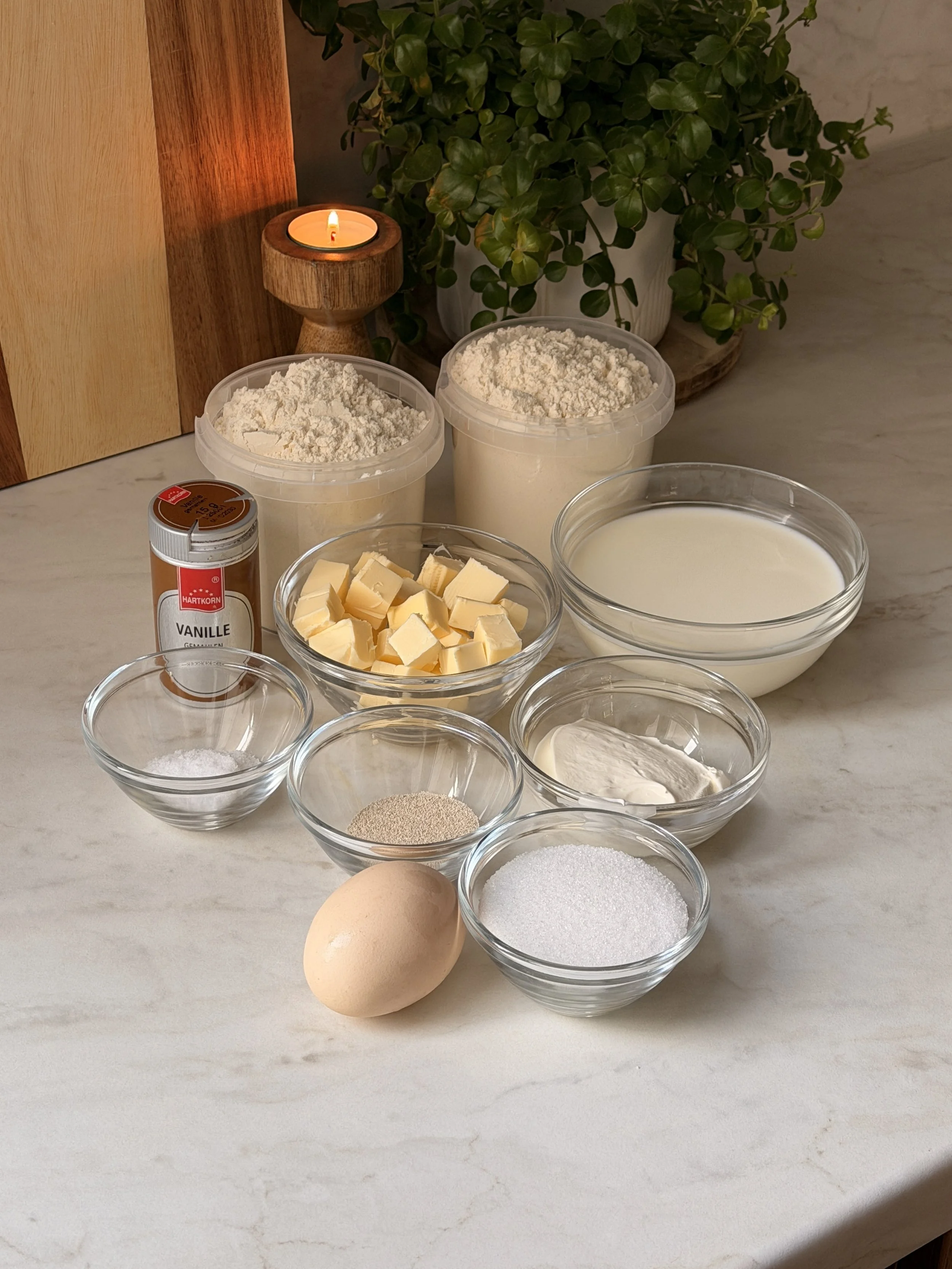
500g all purpose flour (4 cups)
50g granulated sugar (1/4 cup)
7g instant dry yeast (1 standard packet)
10g salt (1 teaspoon + 1/4 teaspoon)
1 large egg
200g lukewarm milk (3/4 cup + 2 tablespoons)
50g full-fat sour cream (3 tablespoons)
1 teaspoon vanilla bean paste or vanilla bean powder
80g unsalted butter, softened (6 tablespoons)
For the Filling:
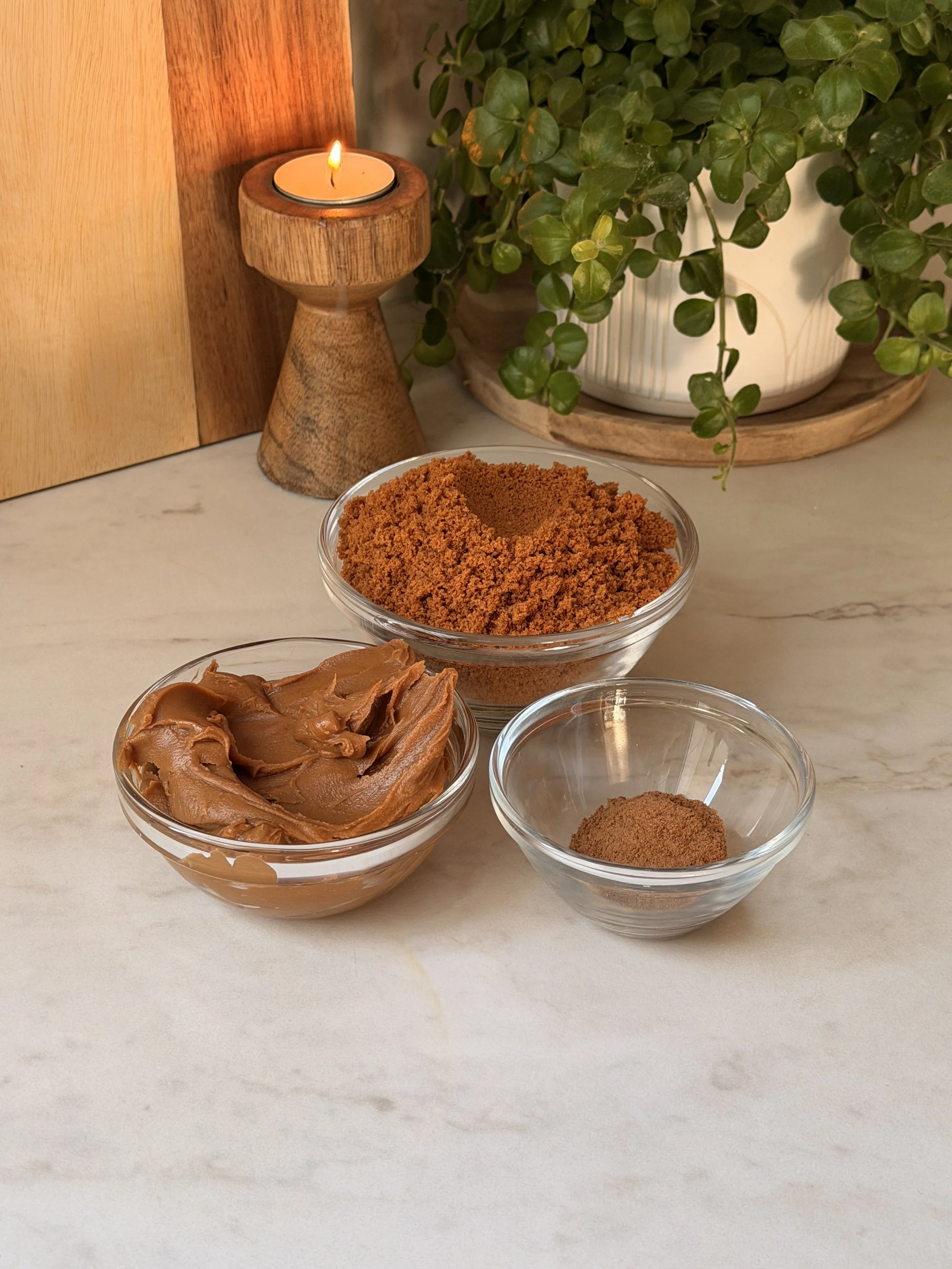
150g Biscoff spread, melted in the microwave (1/2 cup + 1 tablespoon)
100g Biscoff Cookies, finely crushed (1 cup)
1 tablespoon of ground cinnamon
For the Frosting:
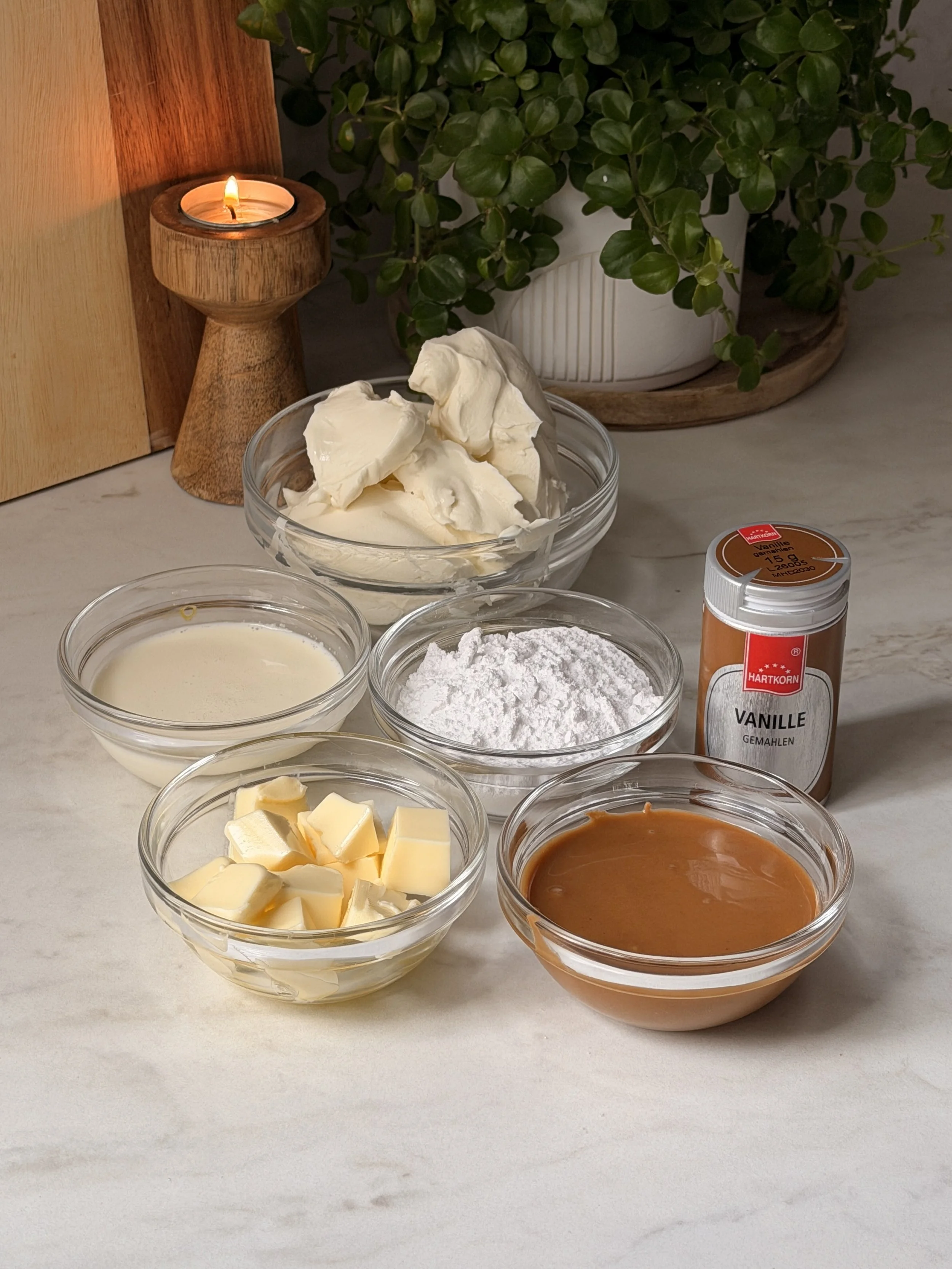
50g unsalted butter, softened (3 tablespoons + 1 teaspoon)
250g full-fat cream cheese (1 cup + 1 tablespoon)
50g powdered sugar (1/3 cup + 1 tablespoon)
70g Biscoff Spread, slightly melted (1/4 cup + 1 teaspoon)
50g heavy whipping cream (1/4 cup)
1 teaspoon vanilla bean paste or 1/2 teaspoon ground vanilla bean powder
Extras:
Heavy cream, to pour over the rolls before baking
Step By Step Instructions With Photos
1. First, prepare the dough.
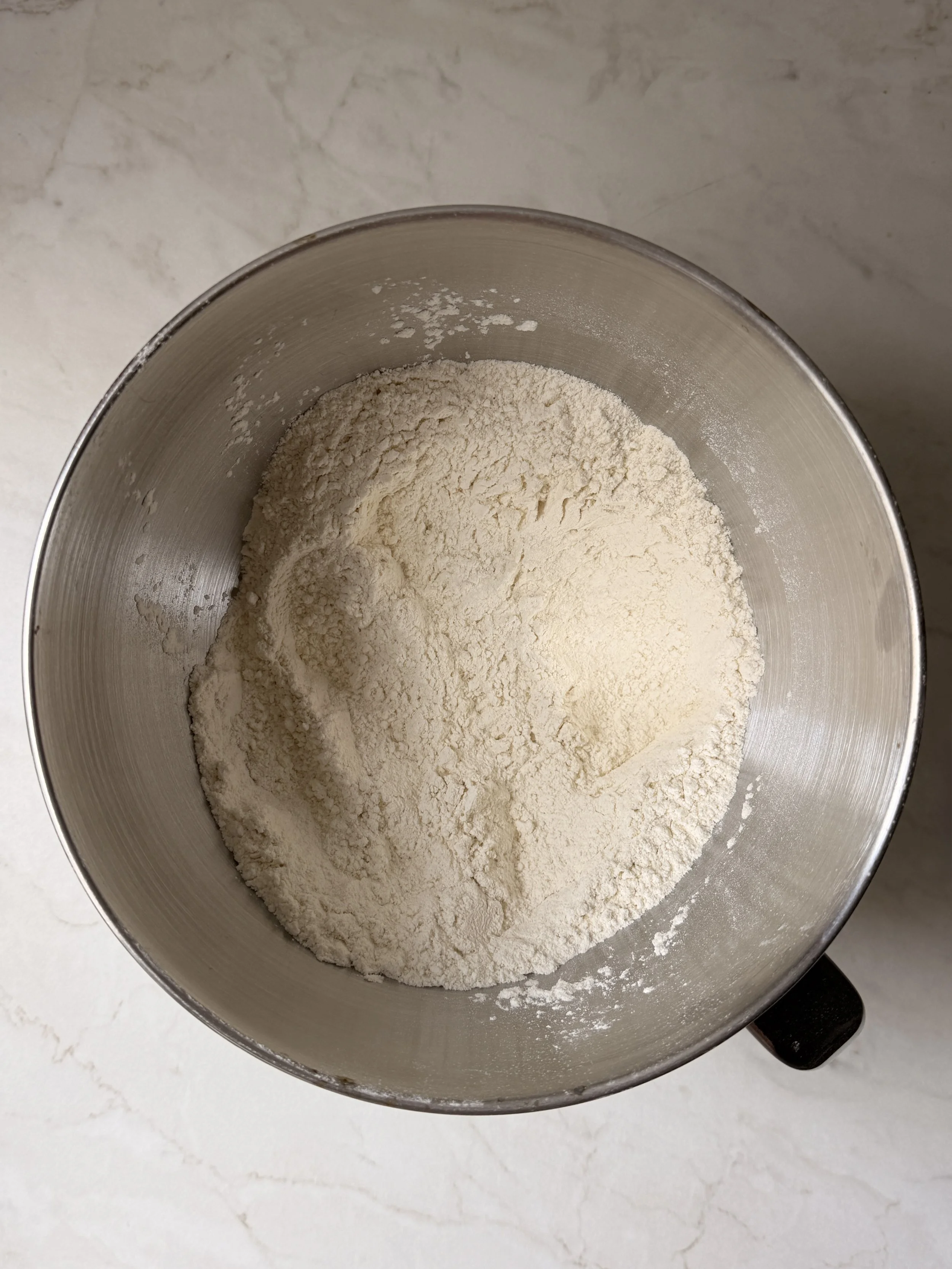
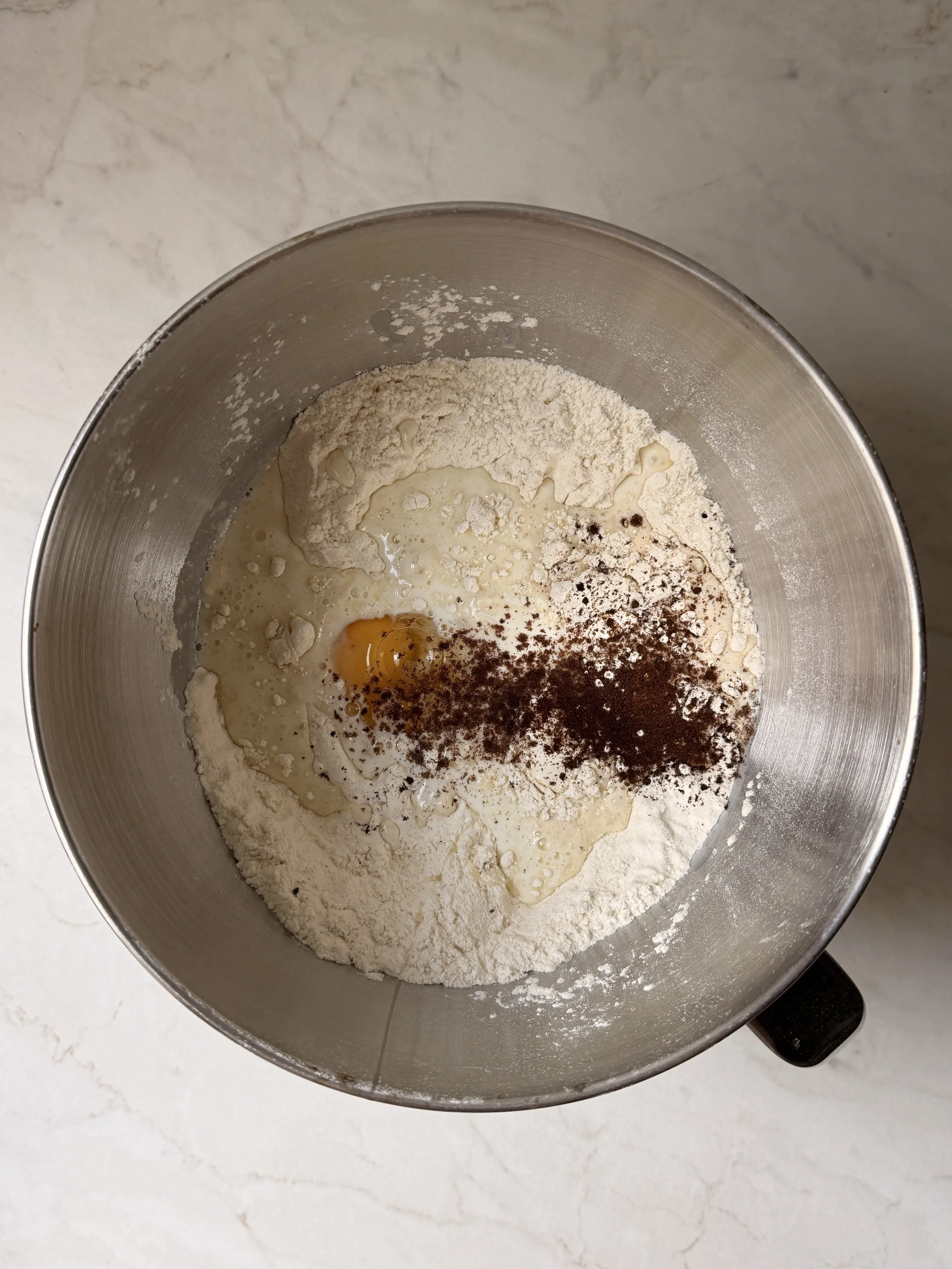
2. In the bowl of your stand mixer, combine the flour, granulated sugar, salt, instant dry yeast and vanilla bean powder.
3. Then add the milk, sour cream and egg.
4. Using the dough hook attachment, knead on low speed until the dough comes together and forms a ball. This should take about 5 minutes.
5. Once the dough has formed a ball, add the butter and continue kneading on low speed for another 8 to 10 minutes, or until the dough becomes smooth and elastic.
6. Transfer the dough to a clean, lightly oiled bowl, cover and let it rise at room temperature for about 2 hours, or until doubled in size.
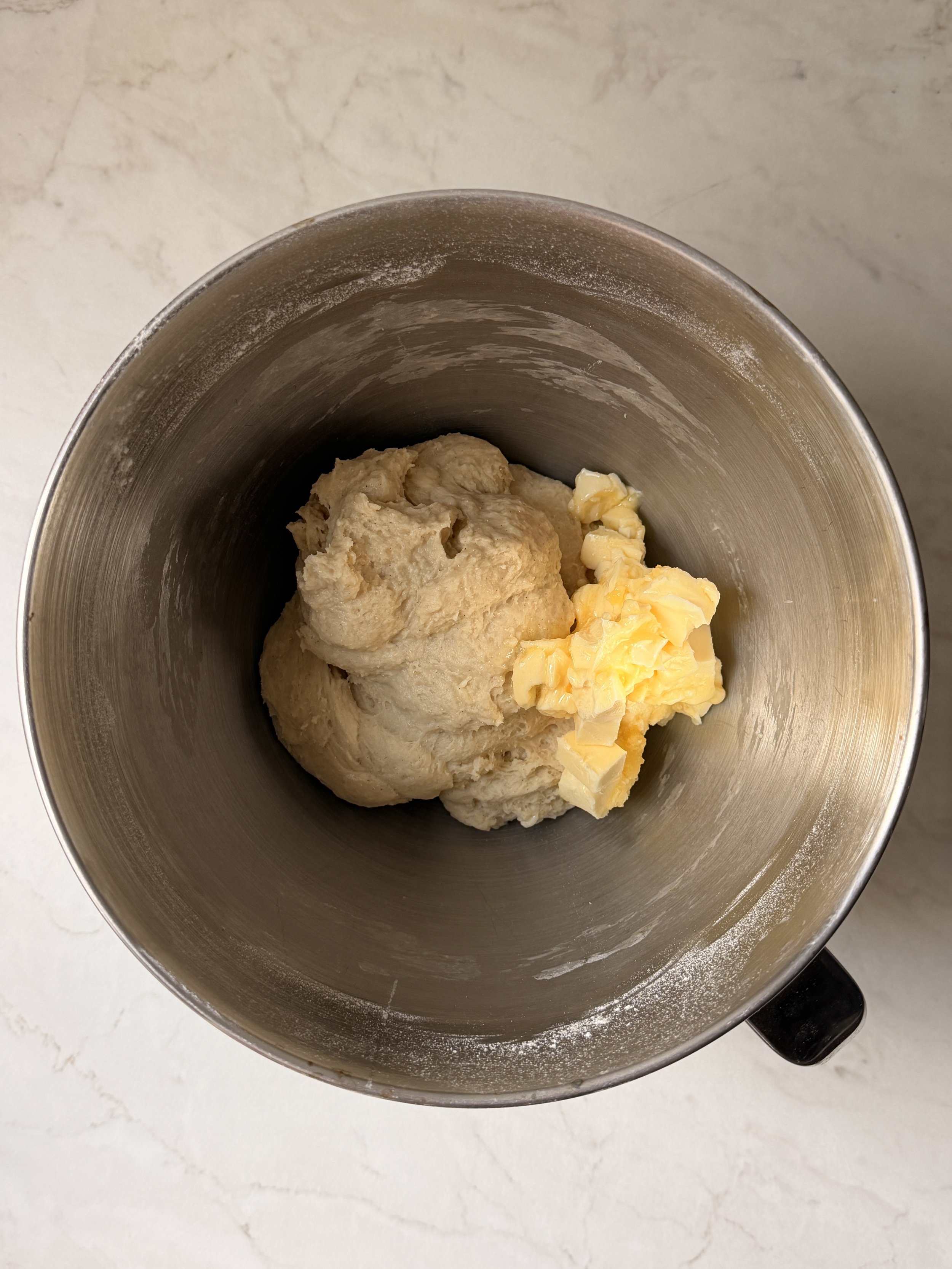
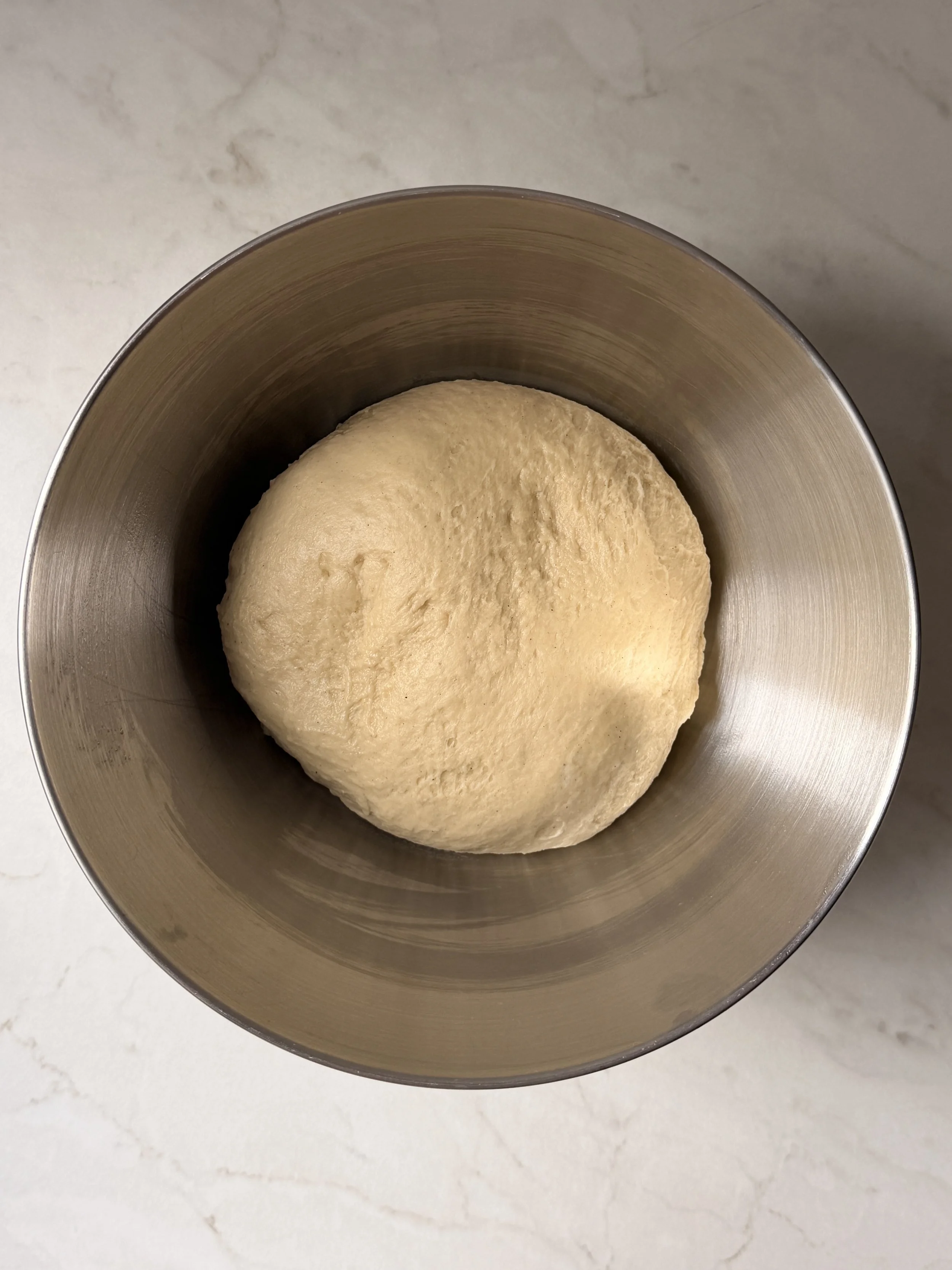
7. Once the dough has doubled in size, gently punch it down and transfer it to a lightly floured surface.
8. Roll out the dough into a 50×35 cm rectangle.
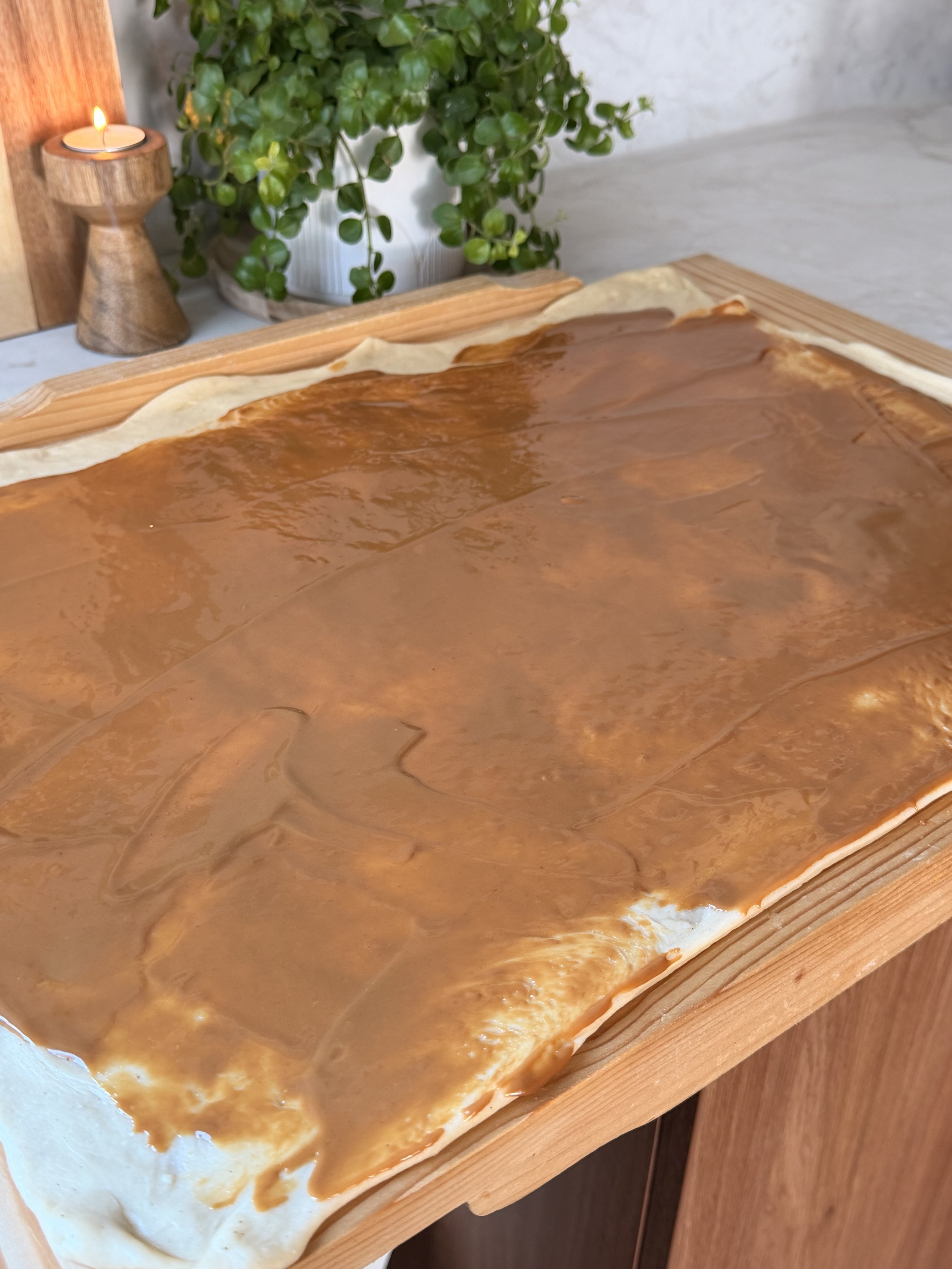
9. Spread the melted Biscoff spread evenly over the dough.
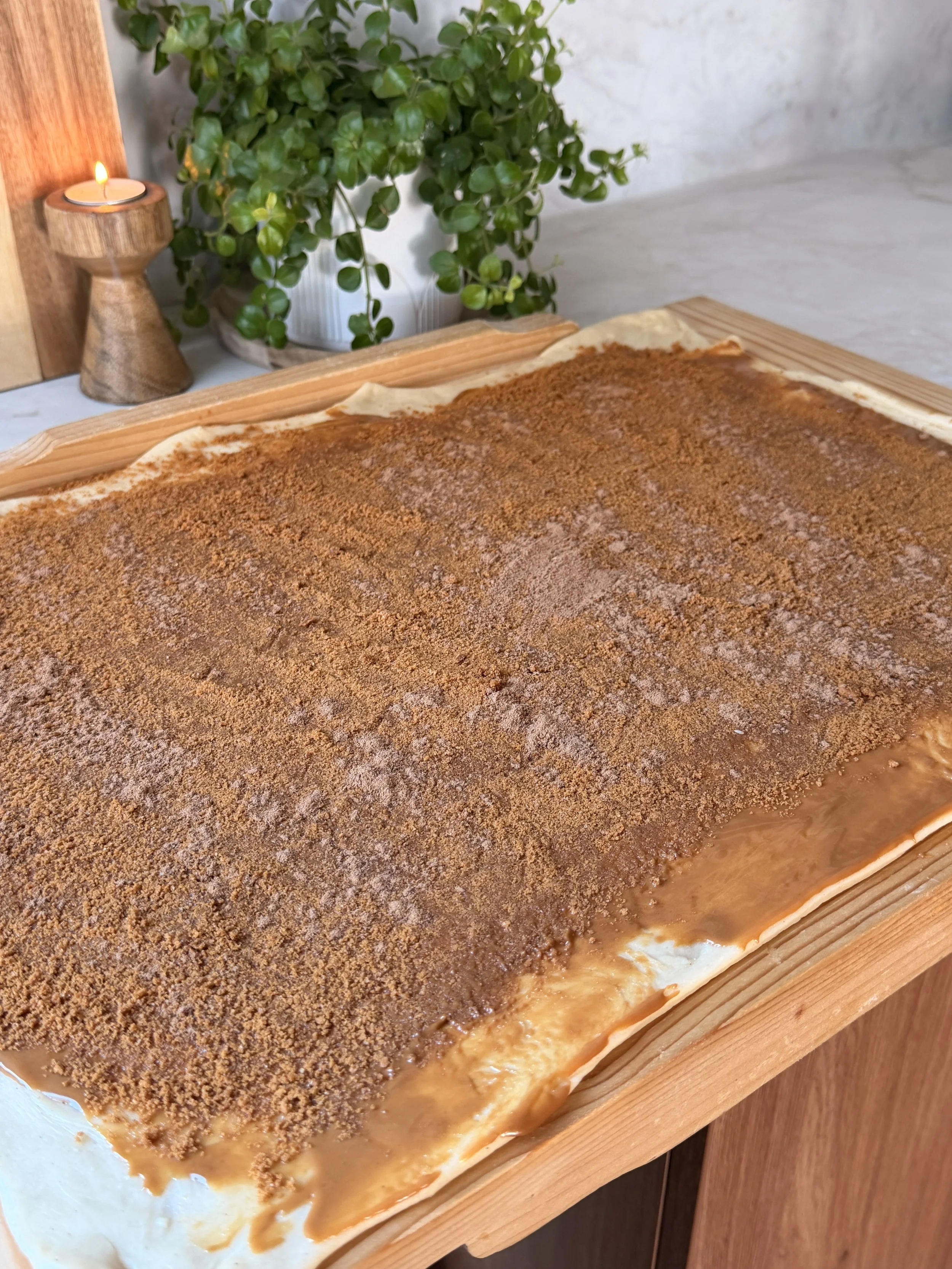
10. Sprinkle the finely crushed Biscoff cookies and cinnamon evenly over the spread, gently pressing them down with your hands to help them stick.
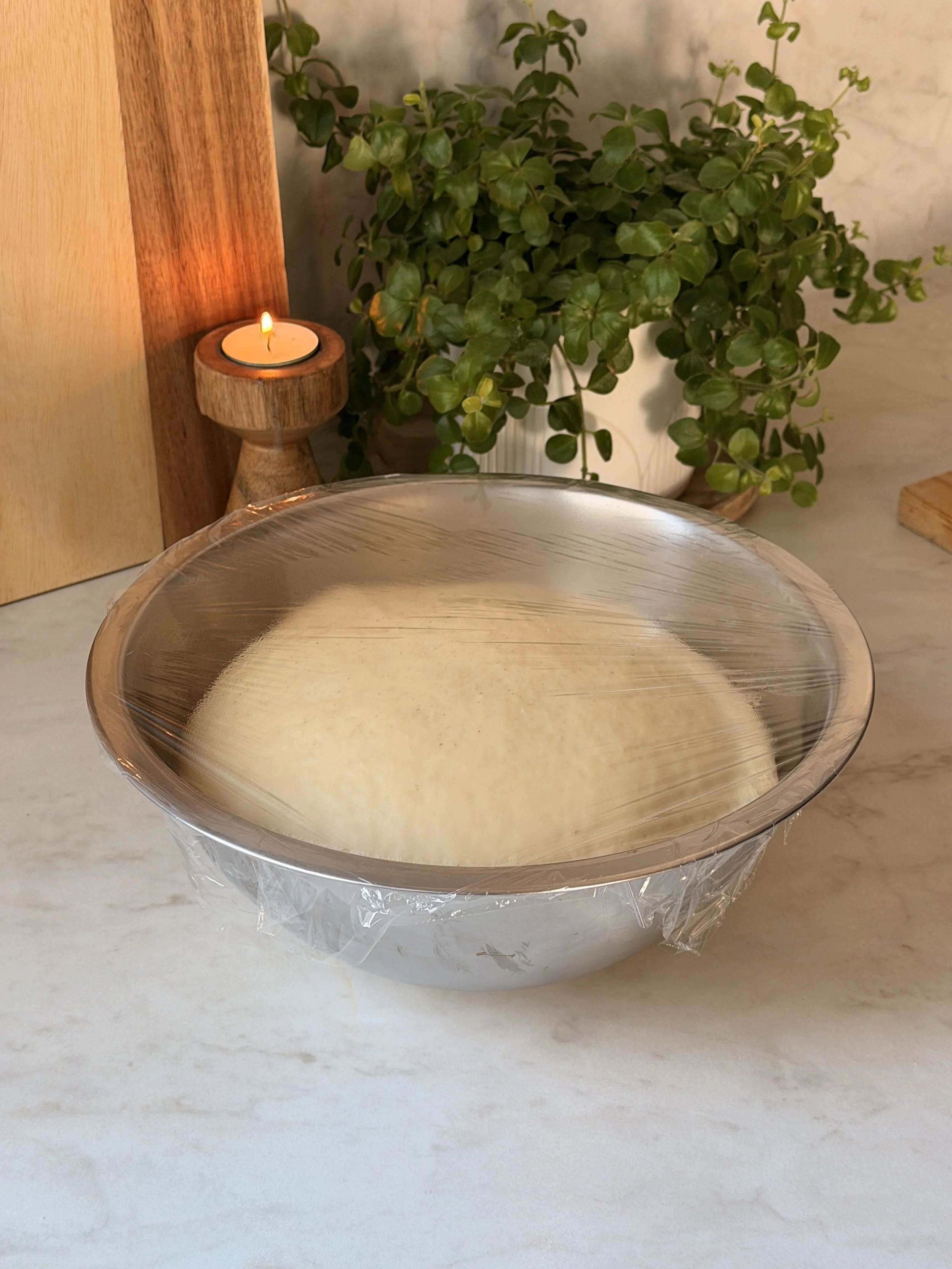
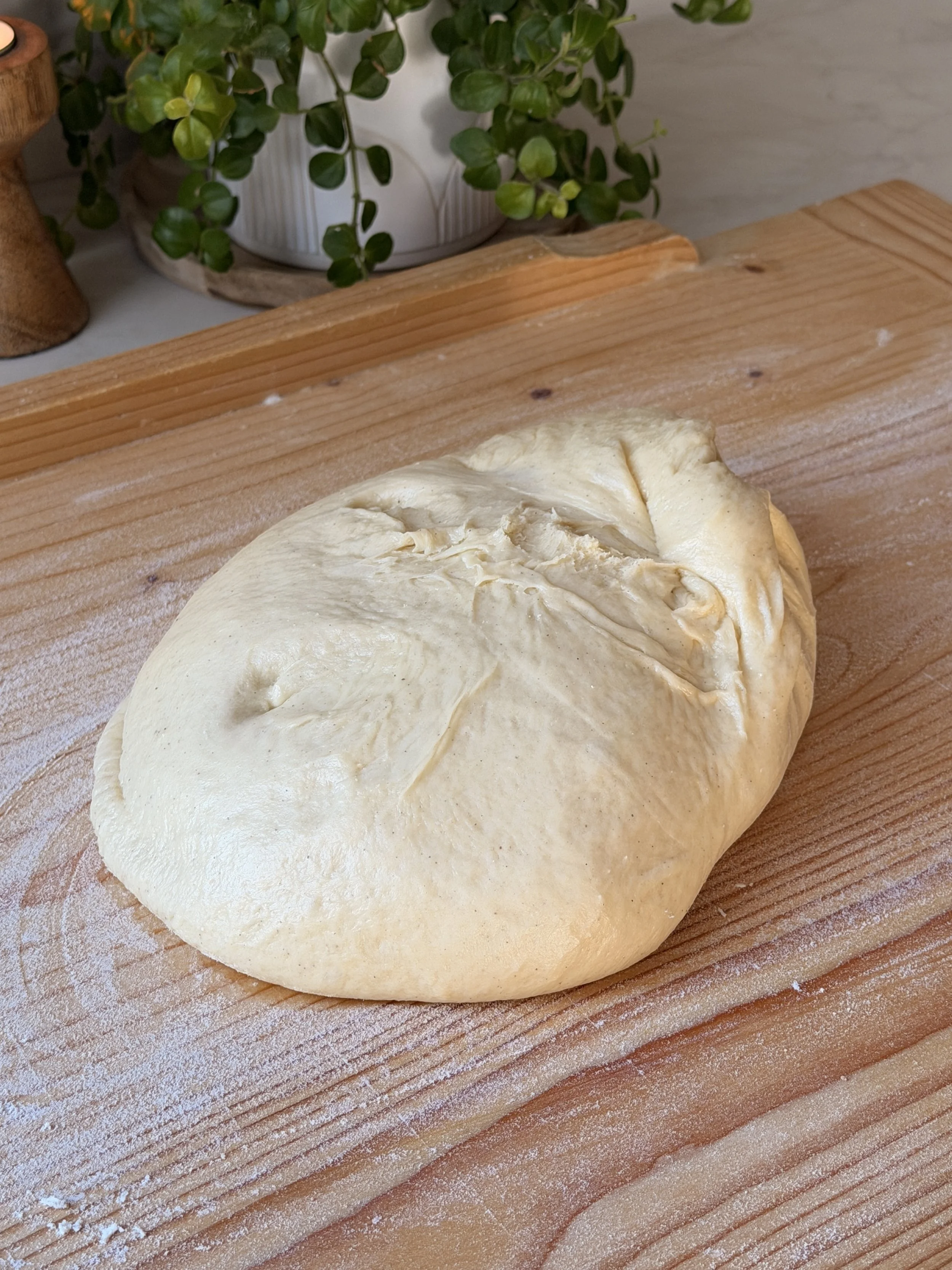
11. Using a pizza cutter, cut the dough lengthwise into 10 strips, each approximately 5 cm wide.
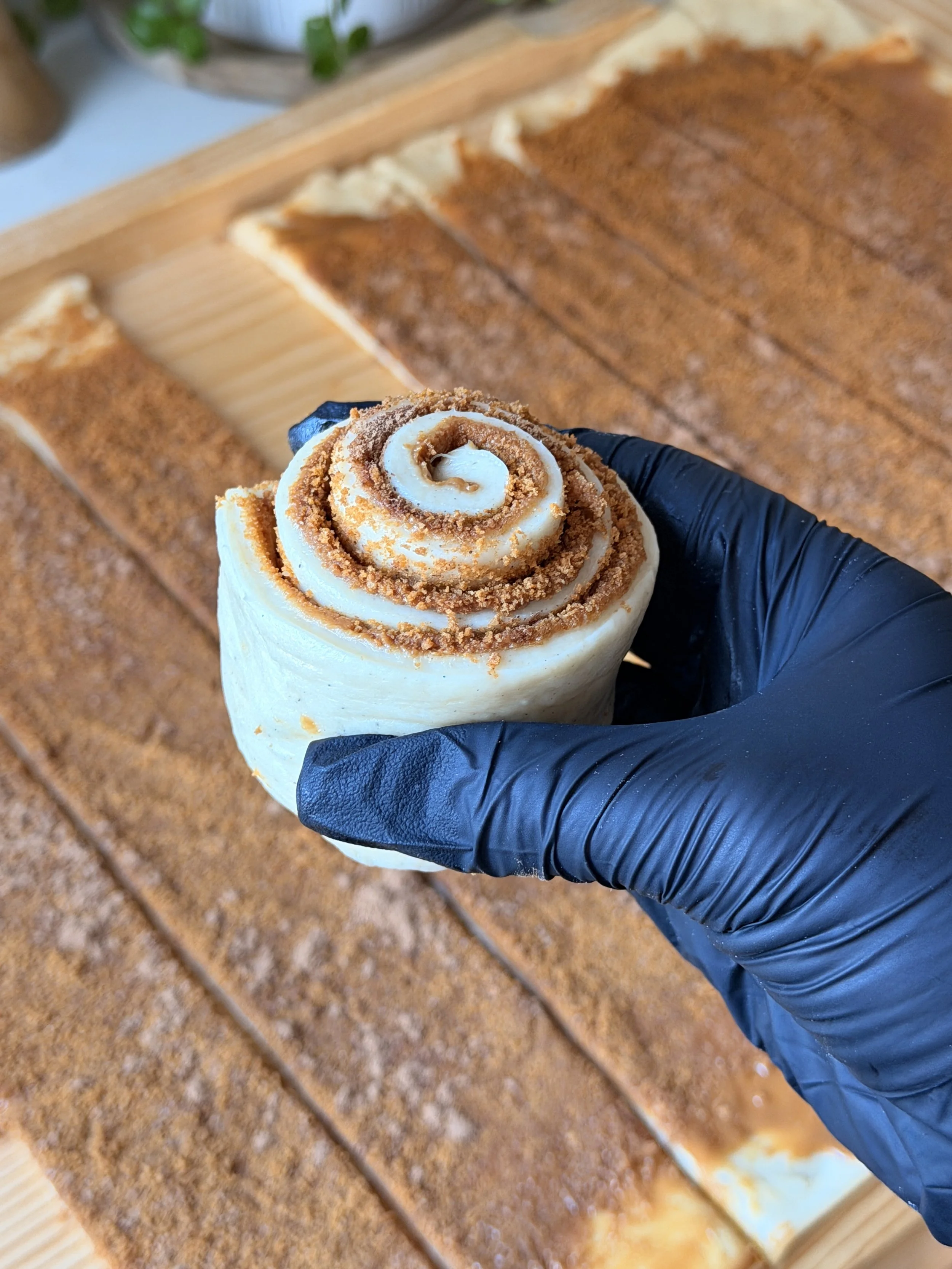
12. Roll up each strip tightly to form a cinnamon roll. You should end up with 10 cinnamon rolls.
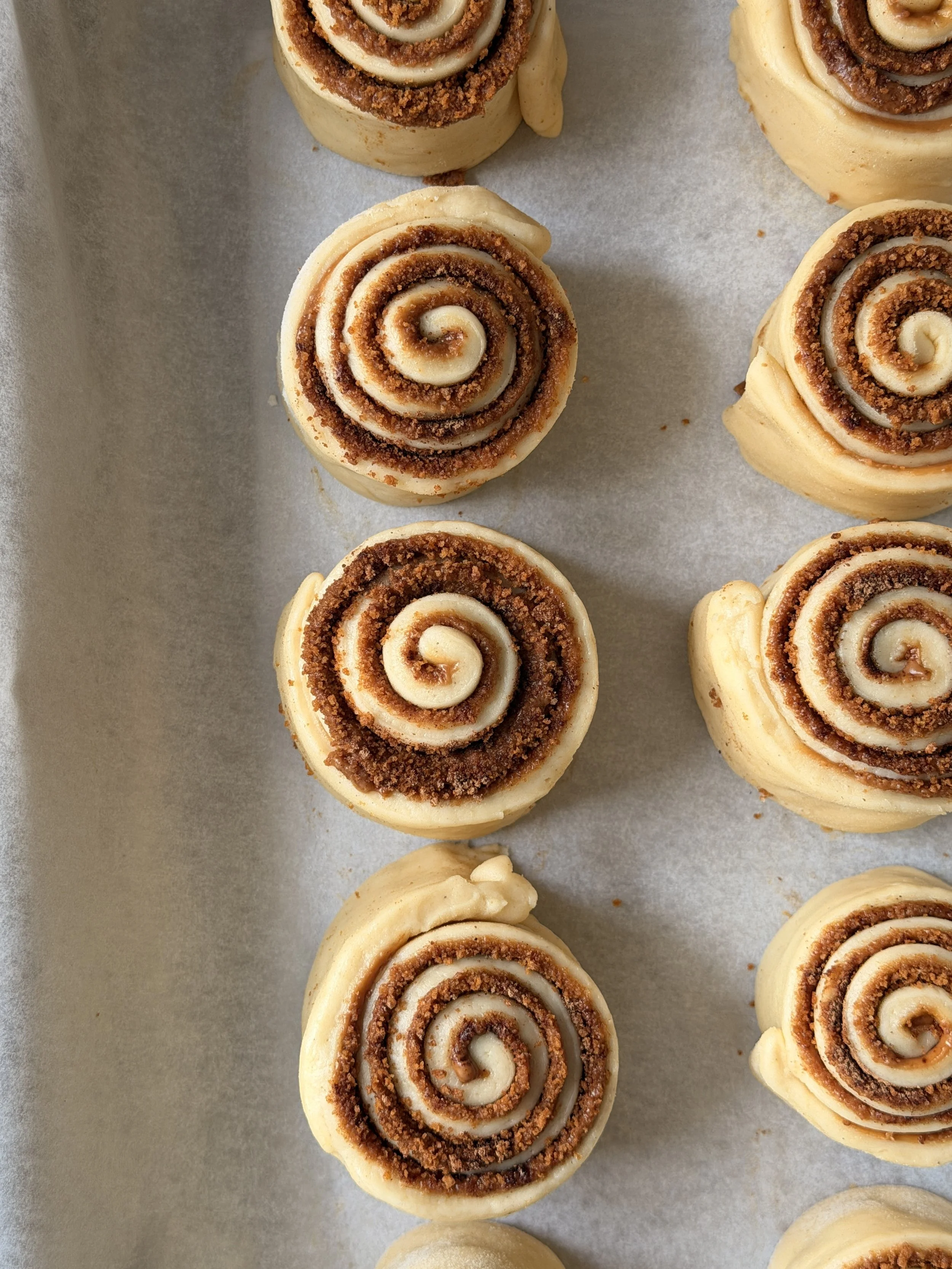
13. Arrange the cinnamon rolls in a large baking pan greased with butter or lined with parchment paper, leaving a little space between.
14. Cover and let the cinnamon rolls rise at room temperature for another hour.
15. Once the second rise is almost complete, preheat your oven to 180°C.
16. Drizzle a little heavy cream over each cinnamon roll, then bake in the preheated oven for approximately 20-25 minutes, or until golden brown.
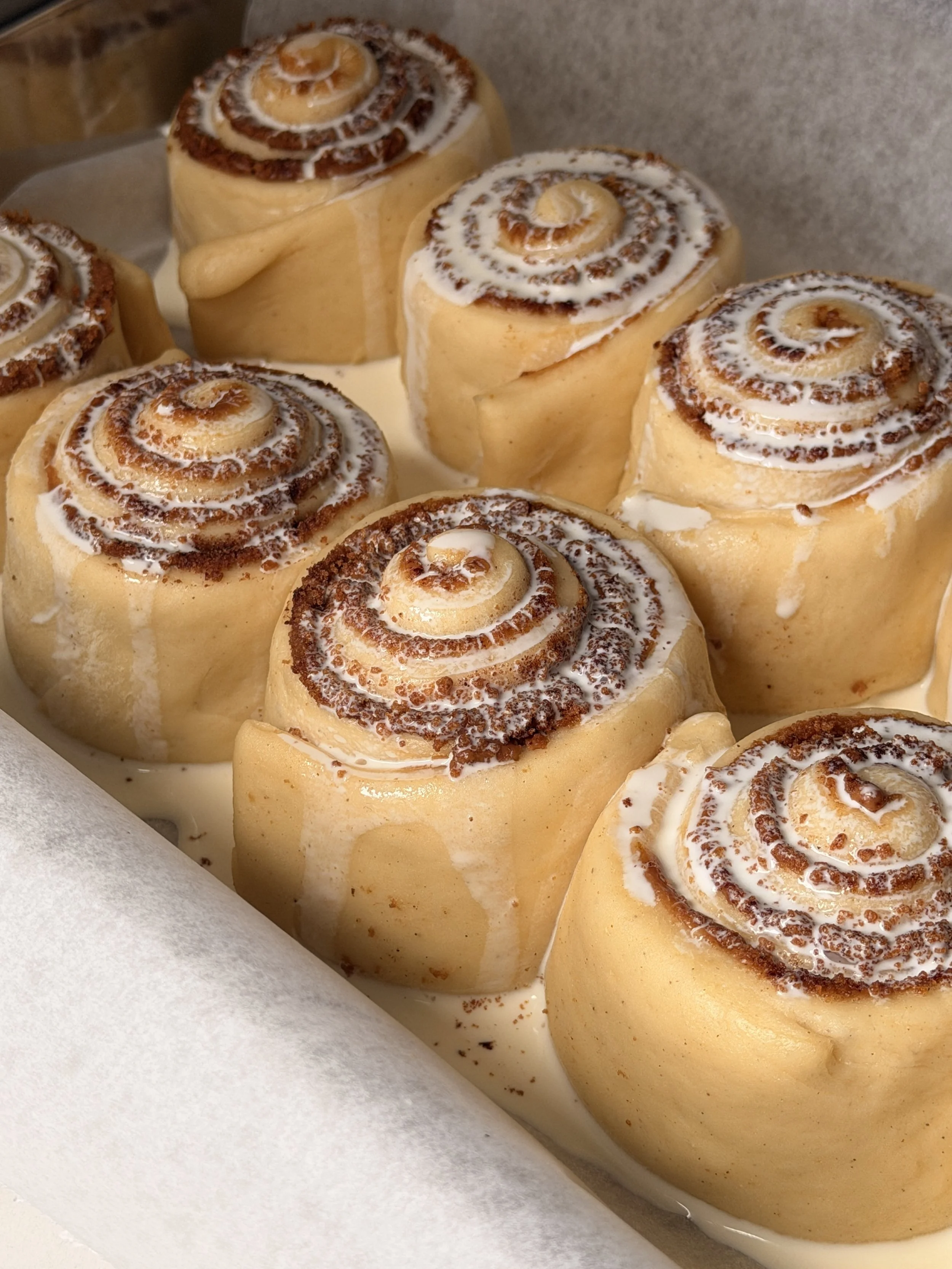
17. While the cinnamon rolls are baking, prepare the frosting.
18. In a medium bowl, combine the softened butter, cream cheese, powdered sugar, Biscoff spreadand vanilla.
19. Using an electric hand mixer, beat everything together until smooth and creamy.
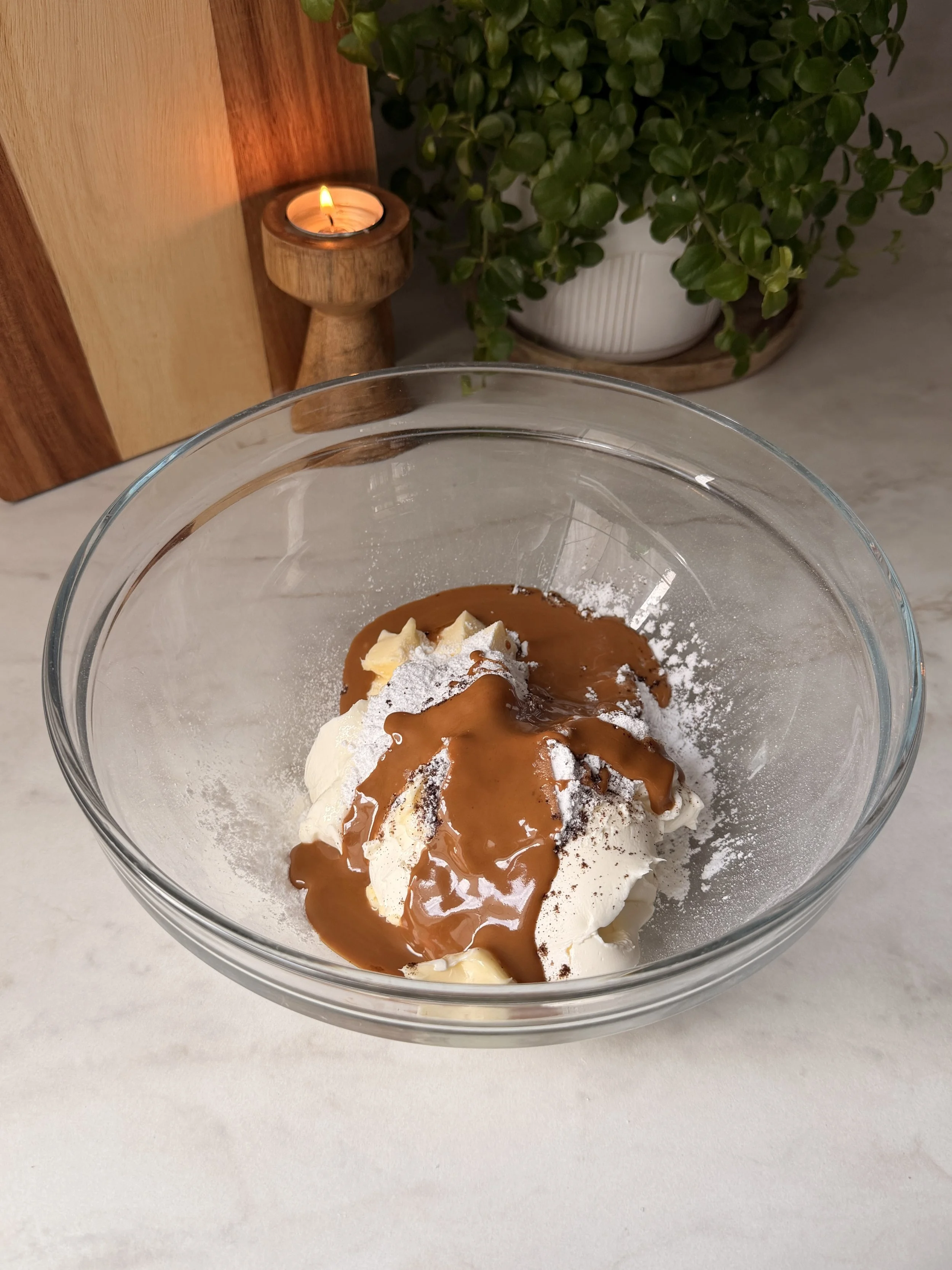
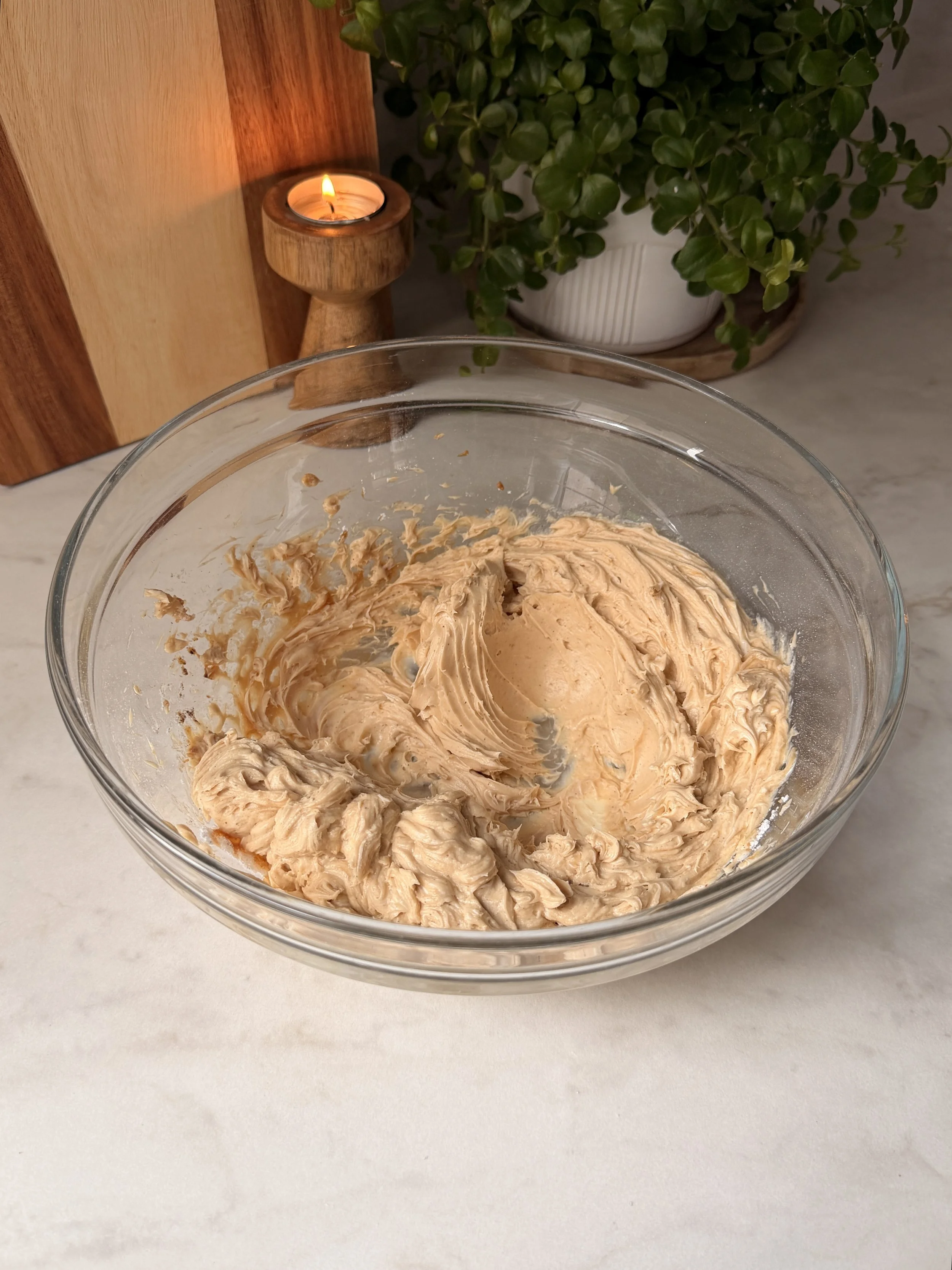
20. Add the heavy cream and continue mixing until fully incorporated.
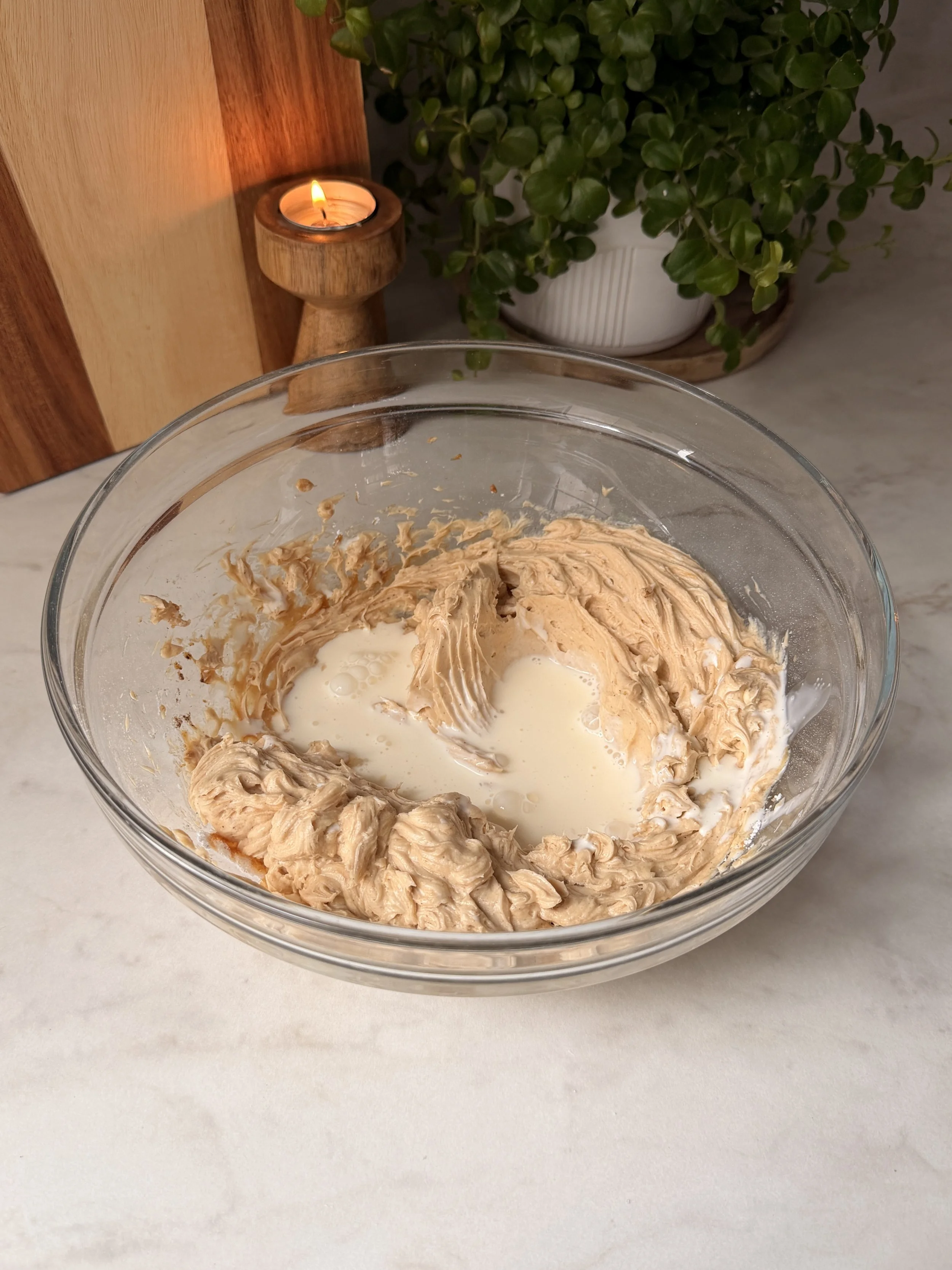
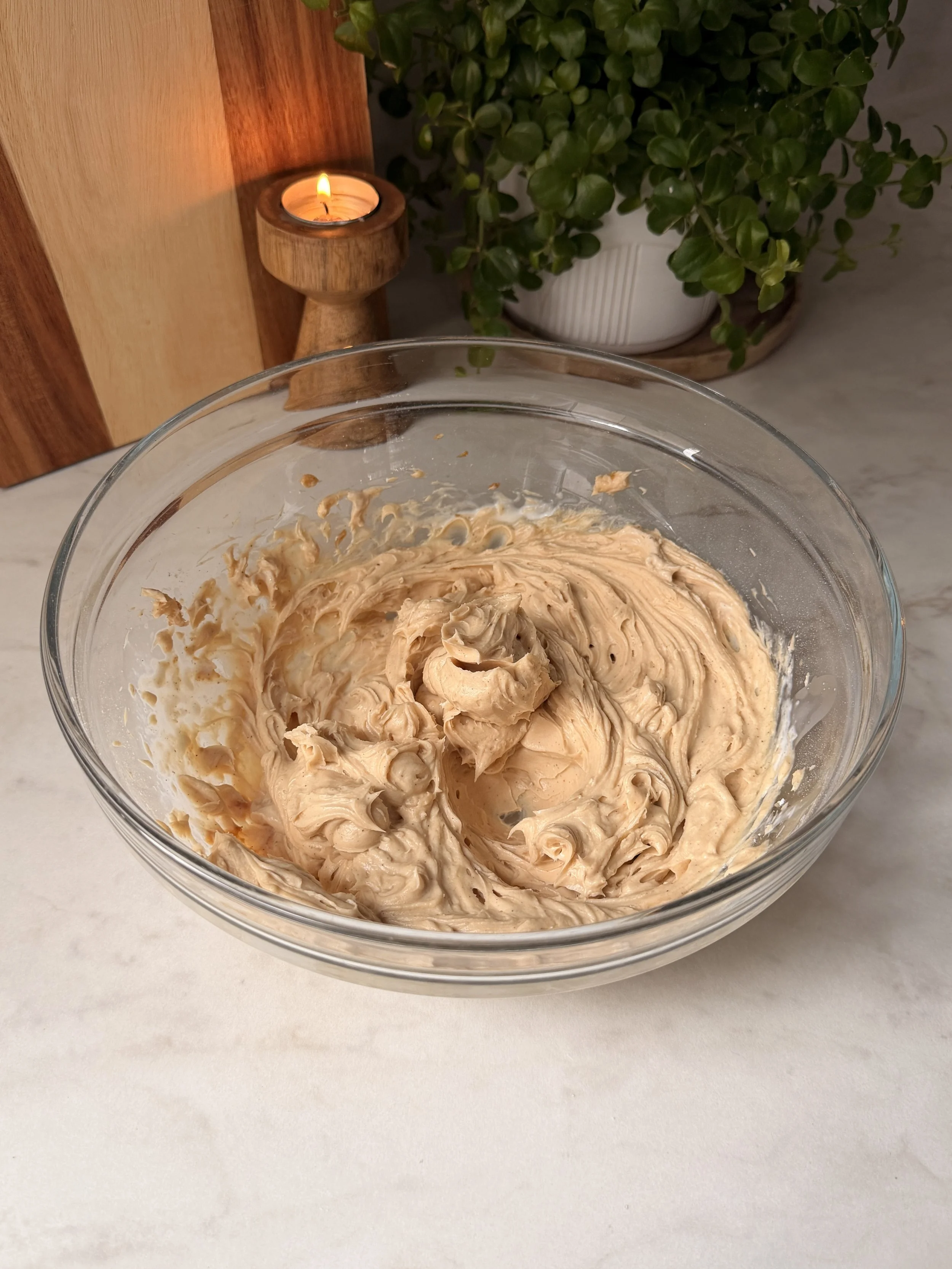
21. As soon as the cinnamon rolls come out of the oven, spread the frosting generously over them.
22. Drizzle a little extra melted Biscoff spread over each roll and finish with some finely crushed Biscoff cookies.
23. Serve warm and enjoy!
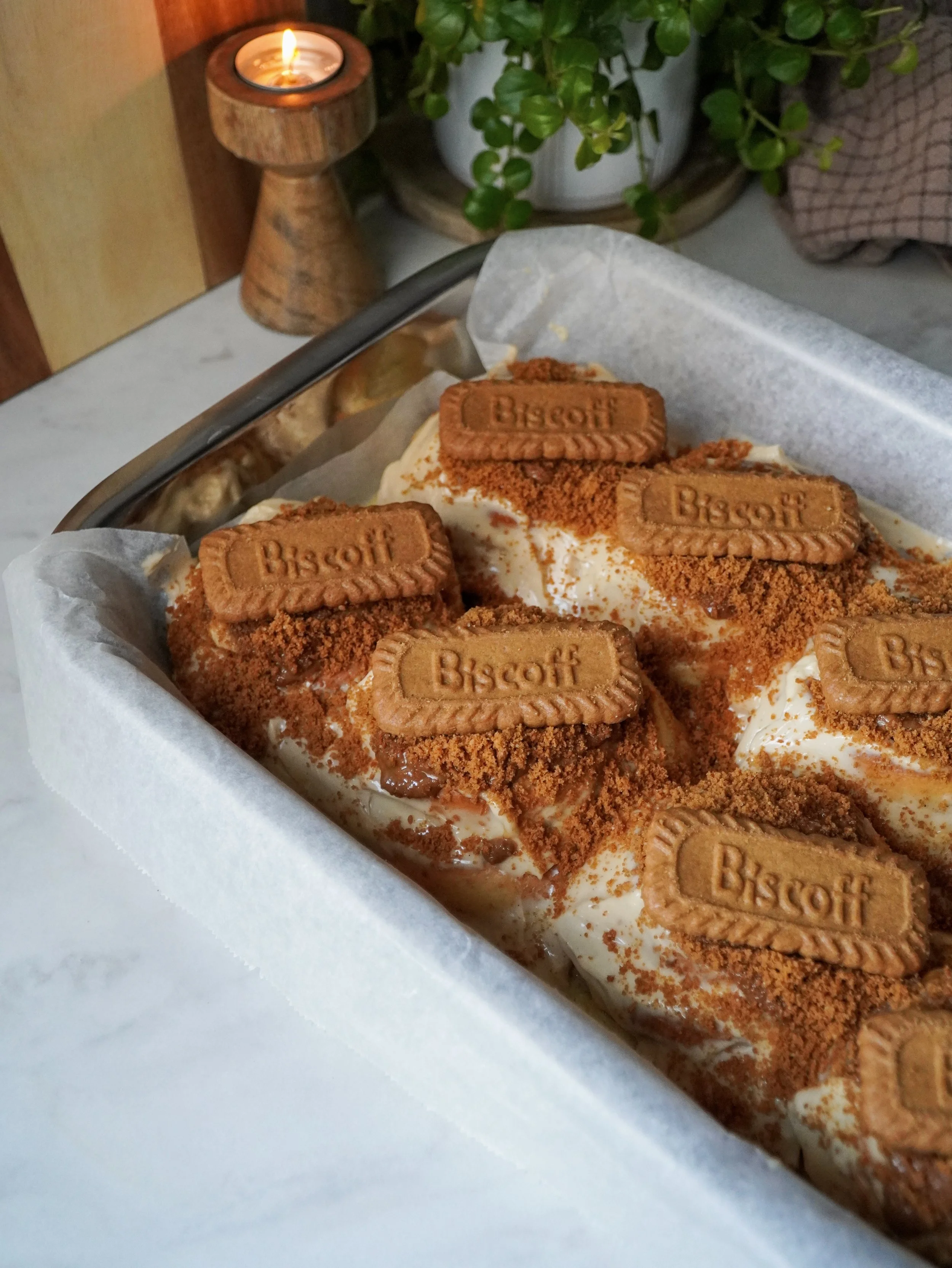

Biscoff Cinnamon Rolls
These homemade Biscoff Cinnamon Rolls are soft, fluffy and packed with the delicious caramelized flavor of Biscoff cookies. Made with a soft, buttery dough, a generous Biscoff cinnamon filling and topped with a creamy Biscoff cream cheese frosting, they're perfect for anyone who loves Cinnamon Rolls with a little twist.
Ingredients
- 500g all purpose flour (4 cups)
- 50g granulated sugar (1/4 cup)
- 7g instant dry yeast (1 standard packet)
- 10g salt (1 teaspoon + 1/4 teaspoon)
- 1 large egg
- 200g lukewarm milk (3/4 cup + 2 tablespoons)
- 50g full-fat sour cream (3 tablespoons)
- 1 teaspoon vanilla bean paste or vanilla bean powder
- 80g unsalted butter, softened (6 tablespoons)
- 150g Biscoff spread, melted in the microwave (1/2 cup + 1 tablespoon)
- 100g Biscoff Cookies, finely crushed (1 cup)
- 1 tablespoon of ground cinnamon
- 50g unsalted butter, softened (3 tablespoons + 1 teaspoon)
- 250g full-fat cream cheese (1 cup + 1 tablespoon)
- 50g powdered sugar (1/3 cup + 1 tablespoon)
- 70g Biscoff Spread, slightly melted (1/4 cup + 1 teaspoon)
- 50g heavy whipping cream (1/4 cup)
- 1 teaspoon vanilla bean paste or 1/2 teaspoon ground vanilla bean powder
- Heavy cream, to pour over the rolls before baking
Instructions
- First, prepare the dough.
- In the bowl of your stand mixer, combine the flour, granulated sugar, salt, instant dry yeast and vanilla bean powder.
- Then add the milk, sour cream and egg.
- Using the dough hook attachment, knead on low speed until the dough comes together and forms a ball. This should take about 5 minutes.
- Once the dough has formed a ball, add the butter and continue kneading on low speed for another 8 to 10 minutes, or until the dough becomes smooth and elastic.
- Transfer the dough to a clean, lightly oiled bowl, cover and let it rise at room temperature for about 2 hours, or until doubled in size.
- Once the dough has doubled in size, gently punch it down and transfer it to a lightly floured surface.
- Roll out the dough into a 50×35 cm rectangle.
- Spread the melted Biscoff spread evenly over the dough.
- Sprinkle the finely crushed Biscoff cookies and cinnamon evenly over the spread, gently pressing them down with your hands to help them stick.
- Using a pizza cutter, cut the dough lengthwise into 10 strips, each approximately 5 cm wide.
- Roll up each strip tightly to form a cinnamon roll. You should end up with 10 cinnamon rolls.
- Arrange the cinnamon rolls in a large baking pan greased with butter or lined with parchment paper, leaving a little space between.
- Cover and let the cinnamon rolls rise at room temperature for another hour.
- Once the second rise is almost complete, preheat your oven to 180°C.
- Drizzle a little heavy cream over each cinnamon roll, then bake in the preheated oven for approximately 20-25 minutes, or until golden brown.
- While the cinnamon rolls are baking, prepare the frosting.
- In a medium bowl, combine the softened butter, cream cheese, powdered sugar, Biscoff spreadand vanilla.
- Using an electric hand mixer, beat everything together until smooth and creamy.
- Add the heavy cream and continue mixing until fully incorporated.
- As soon as the cinnamon rolls come out of the oven, spread the frosting generously over them.
- Drizzle a little extra melted Biscoff spread over each roll and finish with some finely crushed Biscoff cookies.
- Serve warm and enjoy!